WASH (Water Sanitation And Hygiene) With CSR

Health and sanitation in India has been a point of concern for quite a long time. According to a report published in the Times of India on 9th September 2015, around 1.2 million children under the age of 5 die every year in the subcontinent.
Most of these deaths occur because of preventable waterborne diseases such as diarrhea and are symptomatic of poor waste management.
This is compounded by the fact that over 600 million people defecate in the open in India.
Government Agendas
The government, with its ‘Swachh Bharat Abhiyan’ campaign, aims at achieving 100% cleanliness in India. The vision is one of better sanitation facilities in both rural and urban centres by 2019. In the budget for the financial year 2016-17, the central government allocated INR 9000 crore towards this drive, a major step in the history of India.
Through a gazetted notification in 2014, the government has also made the involvement of corporates compulsory in this massive drive through the Companies Act of 2014. This makes it compulsory for industries to contribute towards the improvement of health conditions through the vehicle of Corporate Social Responsibility.
Corporations And CSR
Even before the call-to-action by the prime minister, a number of big companies had already adopted CSR measures to better the sanitation and hygiene conditions of India.
CSR divisions of corporations add value through measures like hand-washing awareness campaigns in local schools, constructing toilets and clean-water facilities, and efficiently managing waste.
Case Study: HUL
Hindustan Unilever Limited has undertaken a long-term initiative as part of the Unilever Sustainable Living Plan. Its objectives, on a global level are:
To help more than a billion people take action to improve their health and wellbeing
To halve the environmental footprint of their products
To enhance the livelihood of millions of people as the business grows
Water Conservation Drive
India faces a scarcity of pure, drinkable water. To solve this, HUL aims to create a water supply of 500 billion litres by 2020. They’ve set up the Hindustan Unilever Foundation (HUF) to improve the water conservation capacity in India.
Help A Child Reach 5
In 2012, HUL started a program called ‘Help A Child Reach 5’. It involved a massive hand-washing awareness campaign under the banner of their product, Lifebuoy. It aims to bring awareness of the importance of hand washing to at least a billion of people by 2020.
In 2015, HUL reached out to would-be and new mothers, teaching them proper sanitation and hygiene during the natal-period of the first 28 days after birth. This period is extremely crucial to the well-being of the child.
They began their drive in Kerala, and have moved to Thesgora, a village in Madhya Pradesh that has recorded one of the highest number of diarrhea cases in children under 5.
An extremely powerful video, propagating the ‘Help A Child Reach 5’ campaign has gone viral.
Water sanitation and hygiene is one of the top issues India needs to focus on collectively. HUL is a titan that has picked up WASH as their focal point for CSR activities. If more businesses come together to aid the government, the poor water sanitation situation can be tackled sooner rather than later.
References:
http://blogs.economictimes.indiatimes.com/ResponsibleFuture/hul-to-create-water-potential-of-500-billion-litres-by-2020-2/
http://www.unicef.org.uk/Media-centre/Press-releases/Unicef-500-children-die-every-day-from-lack-of-safe-water-sanitation-in-sub-Saharan-Africa-/
http://www.triplepundit.com/2015/06/business-case-corporate-investments-water-hygiene/
http://blogs.economictimes.indiatimes.com/ResponsibleFuture/tackling-the-water-sanitation-and-hygiene-wash-challenge-via-csr/
http://pmindia.gov.in/en/government_tr_rec/swachh-bharat-abhiyan-2/
http://unicef.in/Story/1125/Water–Environment-and-Sanitation
http://www.lifebuoy.com/socialmission/help-childreach5/helpchild
https://swachhbharat.mygov.in/
https://www.youtube.com/watch?v=VsnP_6kdtDY&feature=youtu.be
Image References:
https://en.wikipedia.org/wiki/Stunted_growth
 tata csr
The result – a brand that is embedded in the hearts and minds of people as well as entrenched in India’s economic landscape.
2. Slow And Steady
For Reliance Industries Limited, sustainability is the key to their growth in the market. Over the years, this company has grown from a textile manufacturer to a versatile conglomerate.
tata csr
The result – a brand that is embedded in the hearts and minds of people as well as entrenched in India’s economic landscape.
2. Slow And Steady
For Reliance Industries Limited, sustainability is the key to their growth in the market. Over the years, this company has grown from a textile manufacturer to a versatile conglomerate.
 reliance csr
CSR has played a key role in its expansion. RIL has associated itself with NGOS, corporates, and trusts to promote sustainability.
This has helped it turn into a brand that dominates not only the textile market but also other verticals like energy, petrochemicals, telecommunications, natural resources, and retail. A lot of the credit goes to RIL’s impact on society, with its healthy attitude towards nurturing the environment.
3.Loop People In On Your CSR Activity
For an organisation to fully benefit from its CSR program, it is essential that its efforts are noticed by consumers. This image of a business that has the best interests of people and the planet at heart is one that is carefully cultivated over time through consistent action.
For example, Procter & Gamble contribute INR 1 from every product they sell towards the education of unprivileged children. Since customers are made aware of this, they are enthusiastic about being involved in giving back in this manner.
reliance csr
CSR has played a key role in its expansion. RIL has associated itself with NGOS, corporates, and trusts to promote sustainability.
This has helped it turn into a brand that dominates not only the textile market but also other verticals like energy, petrochemicals, telecommunications, natural resources, and retail. A lot of the credit goes to RIL’s impact on society, with its healthy attitude towards nurturing the environment.
3.Loop People In On Your CSR Activity
For an organisation to fully benefit from its CSR program, it is essential that its efforts are noticed by consumers. This image of a business that has the best interests of people and the planet at heart is one that is carefully cultivated over time through consistent action.
For example, Procter & Gamble contribute INR 1 from every product they sell towards the education of unprivileged children. Since customers are made aware of this, they are enthusiastic about being involved in giving back in this manner.
 p&g csr
By identifying with the brand and its CSR activities, consumers contribute towards its success in the market.
Being a philanthropist is great, but being a well-known philanthropist puts you in the good books of prospective clientele. The bottom line is that CSR, when carried out strategically, casts a favourable light on your brand image.
References:
p&g csr
By identifying with the brand and its CSR activities, consumers contribute towards its success in the market.
Being a philanthropist is great, but being a well-known philanthropist puts you in the good books of prospective clientele. The bottom line is that CSR, when carried out strategically, casts a favourable light on your brand image.
References:

 1.A Little Planning Goes A Long Way
Unfortunately, the world today is plagued with a multitude of problems that seem to be growing in both number and seriousness over time. So, before setting out to do some good, you need to take a step back and indulge in extensive planning and research.
csr areas
The first step to this end would be identifying a cause or issue that resonates with the core values of your company. For instance, a business specializing in food supply should target the food scarcity faced by some parts of the world.
Once you know which issue you want to focus on, create a comprehensive strategy that puts your available resources to the best possible use. This is also the part where you set a budget for your CSR activities.
2.Work With The Best
After establishing your CSR objectives and plan, find advisers who specialize in the particular field you’re targeting. With their expertise and guidance, you’ll find it easier to implement your plans and strategies on a larger scale. Partner with NGOs and other not-for-profit organisations to take your CSR efforts to the next level.
3.Continued Focus Is Key
corporate conscience csr
Starting something and dropping it midway due to lack of interest and slow progress isn’t an advisable strategy for obvious reasons. The same applies to your CSR initiatives. Once you invest considerable effort and resources into a particular plan, stick with it and see it through. All you need is a little motivation and perseverance to make a substantial impact in the lives of the people you’re targeting.
4. Create A Synergy Between Work And Philanthropy
While completely different things on their own, the company’s goals and their CSR efforts need to come together to work successfully. Businesses should ideally have a separate department focusing on CSR, but this doesn’t mean that regular employees should be left out of the fun. Make an effort to actively engage your employees and you’ll find that it’s much easier to make the world a better place.
Follow these 4 tips and you’ll be well on your way towards a thriving CSR initiative.
References:
1.A Little Planning Goes A Long Way
Unfortunately, the world today is plagued with a multitude of problems that seem to be growing in both number and seriousness over time. So, before setting out to do some good, you need to take a step back and indulge in extensive planning and research.
csr areas
The first step to this end would be identifying a cause or issue that resonates with the core values of your company. For instance, a business specializing in food supply should target the food scarcity faced by some parts of the world.
Once you know which issue you want to focus on, create a comprehensive strategy that puts your available resources to the best possible use. This is also the part where you set a budget for your CSR activities.
2.Work With The Best
After establishing your CSR objectives and plan, find advisers who specialize in the particular field you’re targeting. With their expertise and guidance, you’ll find it easier to implement your plans and strategies on a larger scale. Partner with NGOs and other not-for-profit organisations to take your CSR efforts to the next level.
3.Continued Focus Is Key
corporate conscience csr
Starting something and dropping it midway due to lack of interest and slow progress isn’t an advisable strategy for obvious reasons. The same applies to your CSR initiatives. Once you invest considerable effort and resources into a particular plan, stick with it and see it through. All you need is a little motivation and perseverance to make a substantial impact in the lives of the people you’re targeting.
4. Create A Synergy Between Work And Philanthropy
While completely different things on their own, the company’s goals and their CSR efforts need to come together to work successfully. Businesses should ideally have a separate department focusing on CSR, but this doesn’t mean that regular employees should be left out of the fun. Make an effort to actively engage your employees and you’ll find that it’s much easier to make the world a better place.
Follow these 4 tips and you’ll be well on your way towards a thriving CSR initiative.
References:

 Vardaan Log Frame Analysis LFA
Though this is a matrix that helps to systemize a program, it is important to define and describe the program & activities in length before incorporating a logframe. This in turn will help to clearly fill the required rows & columns with higher efficiency. Moreover, one of the important features is that the tool is flexible as per the project needs.
Therefore, logical framework is a way of thinking about development projects that enable us to summarize a project with the key components in a single page thereby establishing a methodical tool for M&E.
Vardaan Log Frame Analysis LFA
Though this is a matrix that helps to systemize a program, it is important to define and describe the program & activities in length before incorporating a logframe. This in turn will help to clearly fill the required rows & columns with higher efficiency. Moreover, one of the important features is that the tool is flexible as per the project needs.
Therefore, logical framework is a way of thinking about development projects that enable us to summarize a project with the key components in a single page thereby establishing a methodical tool for M&E. 
 Philanthropy – Sharing good
But it’s not just Indians who are proactively involved in national social reform. Many foreign organisations have made their contribution as well, chief amongst them being the Bill and Melinda Gates Foundation. This organisation began its work more than a decade ago in India with an initiative to battle the spread of HIV. Since then, the Gates Foundation has expanded its scope to deal with maternal and child health, sanitation and agricultural development. Other foreign business powerhouses like HP have created innovative CSR programs such as the one that promotes e-learning solutions in rural India.
Corporate philanthropy in India has improved by leaps and bounds after the CSR Act in 2013. Even small to medium-sized companies are making their collective efforts to bring about effective change. Although there’s a lot left to be done, India today stands as a shining example to the rest of the world when it comes to philanthropy.
References:
Philanthropy – Sharing good
But it’s not just Indians who are proactively involved in national social reform. Many foreign organisations have made their contribution as well, chief amongst them being the Bill and Melinda Gates Foundation. This organisation began its work more than a decade ago in India with an initiative to battle the spread of HIV. Since then, the Gates Foundation has expanded its scope to deal with maternal and child health, sanitation and agricultural development. Other foreign business powerhouses like HP have created innovative CSR programs such as the one that promotes e-learning solutions in rural India.
Corporate philanthropy in India has improved by leaps and bounds after the CSR Act in 2013. Even small to medium-sized companies are making their collective efforts to bring about effective change. Although there’s a lot left to be done, India today stands as a shining example to the rest of the world when it comes to philanthropy.
References:

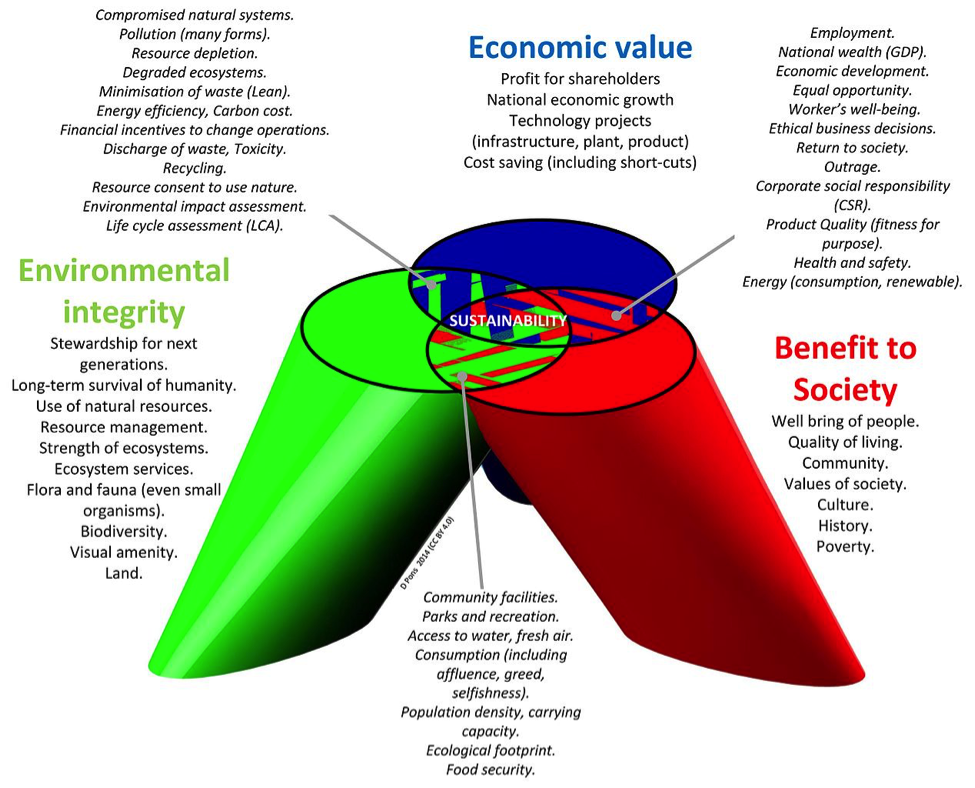 A sustainable approach not only has an impact on an organisation’s future, it also influences the company’s suppliers, its customers, and the world’s resources at large.
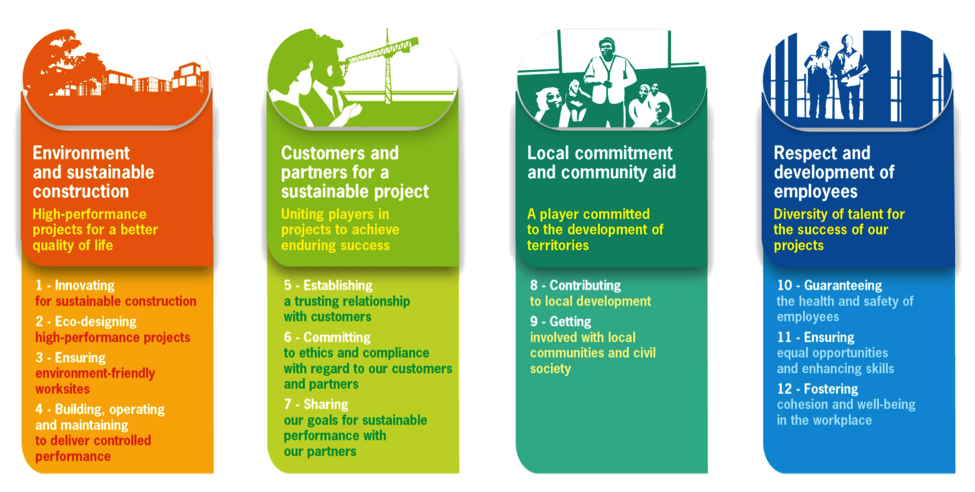 If CSR isn’t undertaken with a sufficiently robust long-term plan in place, it could turn into a liability for the company. Here’s an example.
An oil-extraction organisation might provide necessities like schools and hospitals in return for a community’s resources. But these facilities require long-term investments and this might not be feasible for the company to provide. In this way, a plan to uphold the interests of exploited communities can quickly become unsustainable and turn into a liability.
Balancing the demands of competing stakeholders is important for CSR programs, but these demands sometimes require utilising capital and resources that should instead be set aside for the future. Unless organisations factor in sustainability when defining the scope of their CSR activities, it could cause more problems than it solves.
So, CSR can be viewed as a method to drive corporations towards transforming their practices and embracing sustainable development. Starbucks is a good example of sustainable CSR. The company supplements its coffee resources by assessing the social, environmental, and economic aspects of coffee production.
Sustainability aims to make an organisation greener and more energy efficient while also looking out for the company’s long term trading interests. It’s a commitment towards the preservation of the environment and its resources.
Organisations that incorporate the best of both CSR and sustainability into their practices stand to benefit from the perks of both, securing their future prospects while also improving brand image.
References:
If CSR isn’t undertaken with a sufficiently robust long-term plan in place, it could turn into a liability for the company. Here’s an example.
An oil-extraction organisation might provide necessities like schools and hospitals in return for a community’s resources. But these facilities require long-term investments and this might not be feasible for the company to provide. In this way, a plan to uphold the interests of exploited communities can quickly become unsustainable and turn into a liability.
Balancing the demands of competing stakeholders is important for CSR programs, but these demands sometimes require utilising capital and resources that should instead be set aside for the future. Unless organisations factor in sustainability when defining the scope of their CSR activities, it could cause more problems than it solves.
So, CSR can be viewed as a method to drive corporations towards transforming their practices and embracing sustainable development. Starbucks is a good example of sustainable CSR. The company supplements its coffee resources by assessing the social, environmental, and economic aspects of coffee production.
Sustainability aims to make an organisation greener and more energy efficient while also looking out for the company’s long term trading interests. It’s a commitment towards the preservation of the environment and its resources.
Organisations that incorporate the best of both CSR and sustainability into their practices stand to benefit from the perks of both, securing their future prospects while also improving brand image.
References:

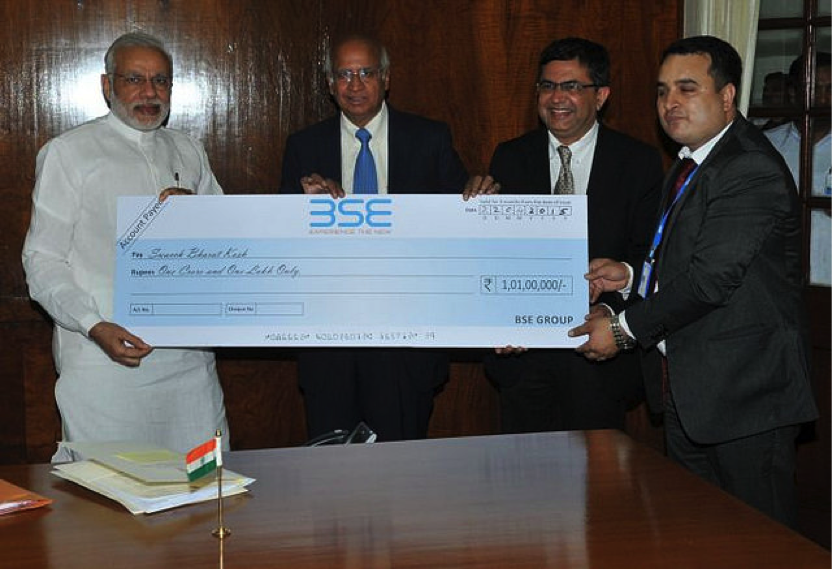 Coal India, TCS, and Infosys were among the other major CSR spenders in the nation.
Most companies tend to invest in CSR activity around their area of operation, and states with a sizeable corporate presence such as Maharashtra, Gujarat, Delhi, Tamil Nadu, Karnataka, and Andhra Pradesh were the biggest beneficiaries.
Some companies, like Axis Bank, chose to spread their CSR budget across the country.
This spate of activity in the inaugural year of the Swachh Bharat-CSR relationship have shown that corporate India can do a lot to develop cleanliness, education, and other social standards across the nation.
Image References:
Coal India, TCS, and Infosys were among the other major CSR spenders in the nation.
Most companies tend to invest in CSR activity around their area of operation, and states with a sizeable corporate presence such as Maharashtra, Gujarat, Delhi, Tamil Nadu, Karnataka, and Andhra Pradesh were the biggest beneficiaries.
Some companies, like Axis Bank, chose to spread their CSR budget across the country.
This spate of activity in the inaugural year of the Swachh Bharat-CSR relationship have shown that corporate India can do a lot to develop cleanliness, education, and other social standards across the nation.
Image References:

