Participatory Rural Appraisal: All For One, One For All
Posted on April 26, 2016 by Megha
NGOs – Participatory rural
NGOs have been gaining steam over the last few years, especially after the CSR mandate was announced in the Companies Act, 2013. But for an NGO to work well and make a lasting change in the society, it needs to understand the requirements and issues of the people at a grassroot level.
One of the many ways NGOs do this is by conducting studies and surveys within villages, also called Participatory Rural Appraisals (PRA).
But before we get to how PRAs assist NGOs, here’s how the study works.
What is a Participatory Rural Appraisal?
A Participatory Rural Appraisal is a tool employed by NGOs and agencies involved in local, national, and international development. It’s used to determine and incorporate the opinions and knowledge of the locals in the planning, management, and running of developmental programmes and projects.
PRA manages to enable the local people to provide their opinions, conduct studies, and come up with plans to tackle issues that their community is facing. The project staff of the NGO joins the locals and together they learn all they can about the village.
The Evolution of PRA
Participatory Rural Appraisal is now considered one of the most popular methods of gathering information about projects in rural areas. But this wasn’t always the case. It was in the 1980s that developmental experts began to feel dissatisfied with the meager number of formal surveys being conducted in rural areas and the biased results that were coming in. It was only in 1983 that Robert Chambers designed the Rapid Rural Appraisal (RRA) where a group of practiced individuals was sent out into the field to gather information and create new, unbiased theories about rural life.
The term ‘Participatory Rural Appraisal’ and ‘Participatory Learning and Action’ (PLA) were only coined in the mid 1990s.
When To Use PRA
PRA involves the community as a whole, and the locals themselves become analysts and investigators in the process. This works in their favour as they are able to determine and prioritize their needs, document and analyse relevant data, and select and train members to work actively for the society’s betterment.
This method of analysis works so well because the actions that rise from it tend to focus and serve the local community in a much more streamlined manner.
Though volunteers from a particular NGO run the programme, they don’t take an active part in the analysis. The organisers use group discussions and exercises to ensure that the locals share, analyse, and come up with an action plan. They assist the villagers and gradually help them understand the issues plaguing their community without influencing their decisions.
PRA works as a tool for transfer of knowledge and also helps improve communication among the villagers and the NGO.
Commonly Used Techniques
There are a vast number of techniques used in PRA. We’ve picked three of the most common methods and illustrated how they’re conducted.
 Commonly Used Technique – CSR
Participatory Mapping and Modelling
Commonly Used Technique – CSR
Participatory Mapping and Modelling
This method involves the use of local materials to create a ground or wall map with the participation of the locals. The villagers draw, or in other ways, represent the historical and current situation of the area. The researcher then interviews each villager about what the map represents and document forests, types of soil, residential areas, farms, water sources, health and welfare conditions, and more. NGOs also create social maps to document who is related to whom, classes, and where they live.
Matrices
A researcher can use matrices as a means to gather information and to facilitate analysis among the villagers. They use grid-like formats to illustrate the link between different activities and factors. For example, a problem-solving matrix is used with columns containing labels like land use, soil types, available resources, and cropping patterns. Then there are rows with labels like constraints, solutions, and initiatives already attempted.
Seasonal Calendars
Variables such as labour, income, rainfall, debt, expenditure, animal fodder, pests, and harvesting periods are documented to show a month to month variation and seasonal issues. Using this data, the NGO goes ahead with a plan of action. The calendars can be used to identify produce grown, plants, harvest seasons, labour issues, and marketing opportunities. Often an 18-month calendar is used, as it illustrates issues and variations much better than a 12-month calendar.
PRA has evolved over the years and is helping the rural population be more empowered and proactive about the different constraints they face in the village. This method clearly illustrates that when NGOs start at the grassroot levels, the society as a whole benefits.
References:
First Image Source: Wikimedia.org
Second Image Source: shutterstock
https://en.wikipedia.org/wiki/Participatory_rural_appraisal
http://www.agraria.unipd.it/agraria/master/02-03/participatory%20rural%20appraisal.pdf
http://www.kstoolkit.org/Participatory+Rural+Appraisal+(PRA)
http://web.worldbank.org/WBSITE/EXTERNAL/TOPICS/EXTSOCIALDEV/0,,contentMDK:21233809~menuPK:3291499~pagePK:64168445~piPK:64168309~theSitePK:3177395~isCURL:Y~isCURL:Y,00.html
http://siteresources.worldbank.org/INTPCENG/1143331-1116505657479/20509228/Toolkit.pdf
http://www.fao.org/docrep/w3241e/w3241e09.htm 
 In India, CSR (Corporate Social Responsibility) is a method through which organisations are encouraged to do their part in saving the Earth and its people.
Vardaan, a consultancy firm, helps businesses achieve their CSR goals by putting them in touch with NPOs (Non-Profit Organisations) that have complementary visions and objectives. Some of these NPOs promote the importance of renewable energy, set up energy conservation projects, and research sustainable energy.
Let’s take a look at how NPOs are helping the environment, one project at a time.
In India, CSR (Corporate Social Responsibility) is a method through which organisations are encouraged to do their part in saving the Earth and its people.
Vardaan, a consultancy firm, helps businesses achieve their CSR goals by putting them in touch with NPOs (Non-Profit Organisations) that have complementary visions and objectives. Some of these NPOs promote the importance of renewable energy, set up energy conservation projects, and research sustainable energy.
Let’s take a look at how NPOs are helping the environment, one project at a time.
 The NPO set up rooftop rainwater harvesting systems in 12 prime locations in both villages. These buildings included the school, the anganwadi centre, community hall, and a few homes. Currently, these systems harvest more than 50,000 litres of water every year.
The NPO also introduced farm ponds and recharge wells to improve the quality of groundwater. All these initiatives have helped the two villages meet their water demands, which includes using treated water for irrigation.
The NPO set up rooftop rainwater harvesting systems in 12 prime locations in both villages. These buildings included the school, the anganwadi centre, community hall, and a few homes. Currently, these systems harvest more than 50,000 litres of water every year.
The NPO also introduced farm ponds and recharge wells to improve the quality of groundwater. All these initiatives have helped the two villages meet their water demands, which includes using treated water for irrigation.

 There is enough evidence on the abundance of renewable resources in India like solar, wind, and thermal energy among others. This can also reduce the reliance on fossil fuels and in turn spur a dramatic reduction in the emission of greenhouse gases and other pollutants.
While solar and wind turbine technologies aren’t that popular in India yet, they are increasingly becoming more and more efficient these days. A good example would be Gujarat’s Solar Park which generates over 1,000 MW worth of power while reducing 8 million tonnes of CO2 emissions.
Although, the initial costs could be on the higher side, it can certainly help with the sustainability mission and can balance out costs in the long run.
There is enough evidence on the abundance of renewable resources in India like solar, wind, and thermal energy among others. This can also reduce the reliance on fossil fuels and in turn spur a dramatic reduction in the emission of greenhouse gases and other pollutants.
While solar and wind turbine technologies aren’t that popular in India yet, they are increasingly becoming more and more efficient these days. A good example would be Gujarat’s Solar Park which generates over 1,000 MW worth of power while reducing 8 million tonnes of CO2 emissions.
Although, the initial costs could be on the higher side, it can certainly help with the sustainability mission and can balance out costs in the long run.


 Reduce Carbon Footprint
Many organisations have sizeable carbon footprints because of the nature of their business and the sheer scale of their operations. Achieving a zero carbon footprint is a protracted process, and both the government and a number of industry leaders are inclined towards this cause.
Cisco, a global giant, has set up 3 photovoltaic facilities in Bangalore and Texas. These facilities will yield 2 million kilowatt hours of electricity every year, and save upto 1150 metric tonnes of carbon emissions annually.
3.Switch To Renewable Resources
A number of industries are now looking into using greener, more sustainable alternatives for their power needs.
Organisations like Cairn India mainly use renewable resources for their energy needs. Cairn India is also in the process of installing a solar-powered lighting system in their main plant in Rajasthan.
Tata Power has switched to imported coal varieties that have a lower sulphur and ash content, resulting in reduced carbon emissions.
4. Saplings For The Future
Mass deforestation is taking away a normal, worry-free future away from our children and grandchildren.
Remember the adage, ‘We have not received Earth from our ancestors, we have borrowed it from future generations.’? As a solution to the widespread and indiscriminate felling of trees, a number of businesses have begun planting trees to try and mitigate the ill-effects of indiscriminate logging.
Coal India Limited, Tata Group, ONGC, Bharat Petroleum, Reliance Industries, and Aditya Birla Group are some of the big names that plant trees in their areas of operation. This planting of saplings is an ongoing process and is carried out on a large scale by these companies every year.
Most of these initiatives are mandated by a number of environmental laws. However, many businesses have taken measures towards creating a greener and cleaner planet of their own volition in the true spirit of CSR.
References:
Reduce Carbon Footprint
Many organisations have sizeable carbon footprints because of the nature of their business and the sheer scale of their operations. Achieving a zero carbon footprint is a protracted process, and both the government and a number of industry leaders are inclined towards this cause.
Cisco, a global giant, has set up 3 photovoltaic facilities in Bangalore and Texas. These facilities will yield 2 million kilowatt hours of electricity every year, and save upto 1150 metric tonnes of carbon emissions annually.
3.Switch To Renewable Resources
A number of industries are now looking into using greener, more sustainable alternatives for their power needs.
Organisations like Cairn India mainly use renewable resources for their energy needs. Cairn India is also in the process of installing a solar-powered lighting system in their main plant in Rajasthan.
Tata Power has switched to imported coal varieties that have a lower sulphur and ash content, resulting in reduced carbon emissions.
4. Saplings For The Future
Mass deforestation is taking away a normal, worry-free future away from our children and grandchildren.
Remember the adage, ‘We have not received Earth from our ancestors, we have borrowed it from future generations.’? As a solution to the widespread and indiscriminate felling of trees, a number of businesses have begun planting trees to try and mitigate the ill-effects of indiscriminate logging.
Coal India Limited, Tata Group, ONGC, Bharat Petroleum, Reliance Industries, and Aditya Birla Group are some of the big names that plant trees in their areas of operation. This planting of saplings is an ongoing process and is carried out on a large scale by these companies every year.
Most of these initiatives are mandated by a number of environmental laws. However, many businesses have taken measures towards creating a greener and cleaner planet of their own volition in the true spirit of CSR.
References:

 tata csr
The result – a brand that is embedded in the hearts and minds of people as well as entrenched in India’s economic landscape.
2. Slow And Steady
For Reliance Industries Limited, sustainability is the key to their growth in the market. Over the years, this company has grown from a textile manufacturer to a versatile conglomerate.
tata csr
The result – a brand that is embedded in the hearts and minds of people as well as entrenched in India’s economic landscape.
2. Slow And Steady
For Reliance Industries Limited, sustainability is the key to their growth in the market. Over the years, this company has grown from a textile manufacturer to a versatile conglomerate.
 reliance csr
CSR has played a key role in its expansion. RIL has associated itself with NGOS, corporates, and trusts to promote sustainability.
This has helped it turn into a brand that dominates not only the textile market but also other verticals like energy, petrochemicals, telecommunications, natural resources, and retail. A lot of the credit goes to RIL’s impact on society, with its healthy attitude towards nurturing the environment.
3.Loop People In On Your CSR Activity
For an organisation to fully benefit from its CSR program, it is essential that its efforts are noticed by consumers. This image of a business that has the best interests of people and the planet at heart is one that is carefully cultivated over time through consistent action.
For example, Procter & Gamble contribute INR 1 from every product they sell towards the education of unprivileged children. Since customers are made aware of this, they are enthusiastic about being involved in giving back in this manner.
reliance csr
CSR has played a key role in its expansion. RIL has associated itself with NGOS, corporates, and trusts to promote sustainability.
This has helped it turn into a brand that dominates not only the textile market but also other verticals like energy, petrochemicals, telecommunications, natural resources, and retail. A lot of the credit goes to RIL’s impact on society, with its healthy attitude towards nurturing the environment.
3.Loop People In On Your CSR Activity
For an organisation to fully benefit from its CSR program, it is essential that its efforts are noticed by consumers. This image of a business that has the best interests of people and the planet at heart is one that is carefully cultivated over time through consistent action.
For example, Procter & Gamble contribute INR 1 from every product they sell towards the education of unprivileged children. Since customers are made aware of this, they are enthusiastic about being involved in giving back in this manner.
 p&g csr
By identifying with the brand and its CSR activities, consumers contribute towards its success in the market.
Being a philanthropist is great, but being a well-known philanthropist puts you in the good books of prospective clientele. The bottom line is that CSR, when carried out strategically, casts a favourable light on your brand image.
References:
p&g csr
By identifying with the brand and its CSR activities, consumers contribute towards its success in the market.
Being a philanthropist is great, but being a well-known philanthropist puts you in the good books of prospective clientele. The bottom line is that CSR, when carried out strategically, casts a favourable light on your brand image.
References:

 1.A Little Planning Goes A Long Way
Unfortunately, the world today is plagued with a multitude of problems that seem to be growing in both number and seriousness over time. So, before setting out to do some good, you need to take a step back and indulge in extensive planning and research.
csr areas
The first step to this end would be identifying a cause or issue that resonates with the core values of your company. For instance, a business specializing in food supply should target the food scarcity faced by some parts of the world.
Once you know which issue you want to focus on, create a comprehensive strategy that puts your available resources to the best possible use. This is also the part where you set a budget for your CSR activities.
2.Work With The Best
After establishing your CSR objectives and plan, find advisers who specialize in the particular field you’re targeting. With their expertise and guidance, you’ll find it easier to implement your plans and strategies on a larger scale. Partner with NGOs and other not-for-profit organisations to take your CSR efforts to the next level.
3.Continued Focus Is Key
corporate conscience csr
Starting something and dropping it midway due to lack of interest and slow progress isn’t an advisable strategy for obvious reasons. The same applies to your CSR initiatives. Once you invest considerable effort and resources into a particular plan, stick with it and see it through. All you need is a little motivation and perseverance to make a substantial impact in the lives of the people you’re targeting.
4. Create A Synergy Between Work And Philanthropy
While completely different things on their own, the company’s goals and their CSR efforts need to come together to work successfully. Businesses should ideally have a separate department focusing on CSR, but this doesn’t mean that regular employees should be left out of the fun. Make an effort to actively engage your employees and you’ll find that it’s much easier to make the world a better place.
Follow these 4 tips and you’ll be well on your way towards a thriving CSR initiative.
References:
1.A Little Planning Goes A Long Way
Unfortunately, the world today is plagued with a multitude of problems that seem to be growing in both number and seriousness over time. So, before setting out to do some good, you need to take a step back and indulge in extensive planning and research.
csr areas
The first step to this end would be identifying a cause or issue that resonates with the core values of your company. For instance, a business specializing in food supply should target the food scarcity faced by some parts of the world.
Once you know which issue you want to focus on, create a comprehensive strategy that puts your available resources to the best possible use. This is also the part where you set a budget for your CSR activities.
2.Work With The Best
After establishing your CSR objectives and plan, find advisers who specialize in the particular field you’re targeting. With their expertise and guidance, you’ll find it easier to implement your plans and strategies on a larger scale. Partner with NGOs and other not-for-profit organisations to take your CSR efforts to the next level.
3.Continued Focus Is Key
corporate conscience csr
Starting something and dropping it midway due to lack of interest and slow progress isn’t an advisable strategy for obvious reasons. The same applies to your CSR initiatives. Once you invest considerable effort and resources into a particular plan, stick with it and see it through. All you need is a little motivation and perseverance to make a substantial impact in the lives of the people you’re targeting.
4. Create A Synergy Between Work And Philanthropy
While completely different things on their own, the company’s goals and their CSR efforts need to come together to work successfully. Businesses should ideally have a separate department focusing on CSR, but this doesn’t mean that regular employees should be left out of the fun. Make an effort to actively engage your employees and you’ll find that it’s much easier to make the world a better place.
Follow these 4 tips and you’ll be well on your way towards a thriving CSR initiative.
References:

 Vardaan Log Frame Analysis LFA
Though this is a matrix that helps to systemize a program, it is important to define and describe the program & activities in length before incorporating a logframe. This in turn will help to clearly fill the required rows & columns with higher efficiency. Moreover, one of the important features is that the tool is flexible as per the project needs.
Therefore, logical framework is a way of thinking about development projects that enable us to summarize a project with the key components in a single page thereby establishing a methodical tool for M&E.
Vardaan Log Frame Analysis LFA
Though this is a matrix that helps to systemize a program, it is important to define and describe the program & activities in length before incorporating a logframe. This in turn will help to clearly fill the required rows & columns with higher efficiency. Moreover, one of the important features is that the tool is flexible as per the project needs.
Therefore, logical framework is a way of thinking about development projects that enable us to summarize a project with the key components in a single page thereby establishing a methodical tool for M&E. 
 Philanthropy – Sharing good
But it’s not just Indians who are proactively involved in national social reform. Many foreign organisations have made their contribution as well, chief amongst them being the Bill and Melinda Gates Foundation. This organisation began its work more than a decade ago in India with an initiative to battle the spread of HIV. Since then, the Gates Foundation has expanded its scope to deal with maternal and child health, sanitation and agricultural development. Other foreign business powerhouses like HP have created innovative CSR programs such as the one that promotes e-learning solutions in rural India.
Corporate philanthropy in India has improved by leaps and bounds after the CSR Act in 2013. Even small to medium-sized companies are making their collective efforts to bring about effective change. Although there’s a lot left to be done, India today stands as a shining example to the rest of the world when it comes to philanthropy.
References:
Philanthropy – Sharing good
But it’s not just Indians who are proactively involved in national social reform. Many foreign organisations have made their contribution as well, chief amongst them being the Bill and Melinda Gates Foundation. This organisation began its work more than a decade ago in India with an initiative to battle the spread of HIV. Since then, the Gates Foundation has expanded its scope to deal with maternal and child health, sanitation and agricultural development. Other foreign business powerhouses like HP have created innovative CSR programs such as the one that promotes e-learning solutions in rural India.
Corporate philanthropy in India has improved by leaps and bounds after the CSR Act in 2013. Even small to medium-sized companies are making their collective efforts to bring about effective change. Although there’s a lot left to be done, India today stands as a shining example to the rest of the world when it comes to philanthropy.
References:

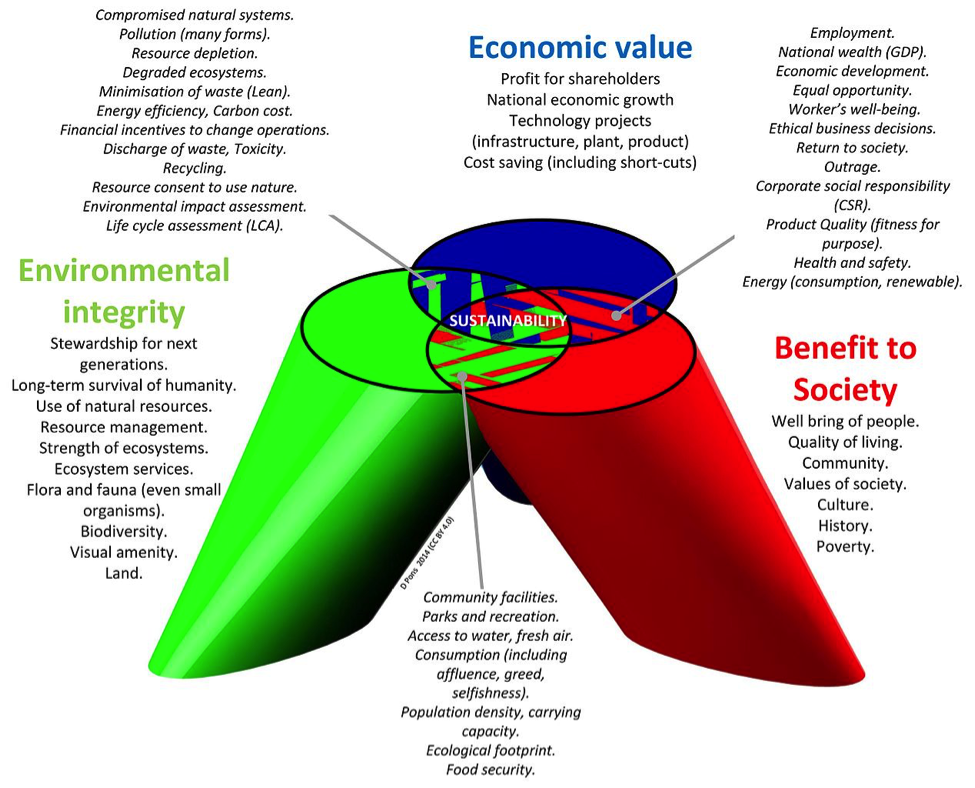 A sustainable approach not only has an impact on an organisation’s future, it also influences the company’s suppliers, its customers, and the world’s resources at large.
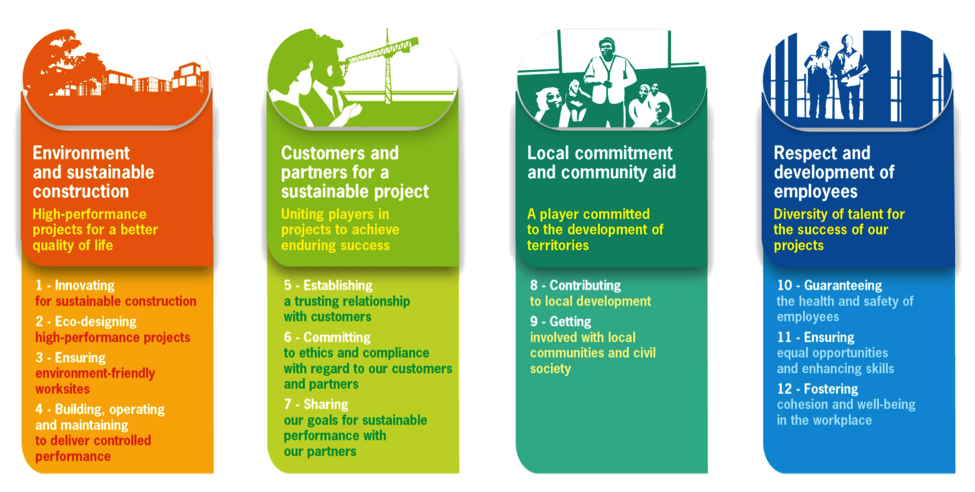 If CSR isn’t undertaken with a sufficiently robust long-term plan in place, it could turn into a liability for the company. Here’s an example.
An oil-extraction organisation might provide necessities like schools and hospitals in return for a community’s resources. But these facilities require long-term investments and this might not be feasible for the company to provide. In this way, a plan to uphold the interests of exploited communities can quickly become unsustainable and turn into a liability.
Balancing the demands of competing stakeholders is important for CSR programs, but these demands sometimes require utilising capital and resources that should instead be set aside for the future. Unless organisations factor in sustainability when defining the scope of their CSR activities, it could cause more problems than it solves.
So, CSR can be viewed as a method to drive corporations towards transforming their practices and embracing sustainable development. Starbucks is a good example of sustainable CSR. The company supplements its coffee resources by assessing the social, environmental, and economic aspects of coffee production.
Sustainability aims to make an organisation greener and more energy efficient while also looking out for the company’s long term trading interests. It’s a commitment towards the preservation of the environment and its resources.
Organisations that incorporate the best of both CSR and sustainability into their practices stand to benefit from the perks of both, securing their future prospects while also improving brand image.
References:
If CSR isn’t undertaken with a sufficiently robust long-term plan in place, it could turn into a liability for the company. Here’s an example.
An oil-extraction organisation might provide necessities like schools and hospitals in return for a community’s resources. But these facilities require long-term investments and this might not be feasible for the company to provide. In this way, a plan to uphold the interests of exploited communities can quickly become unsustainable and turn into a liability.
Balancing the demands of competing stakeholders is important for CSR programs, but these demands sometimes require utilising capital and resources that should instead be set aside for the future. Unless organisations factor in sustainability when defining the scope of their CSR activities, it could cause more problems than it solves.
So, CSR can be viewed as a method to drive corporations towards transforming their practices and embracing sustainable development. Starbucks is a good example of sustainable CSR. The company supplements its coffee resources by assessing the social, environmental, and economic aspects of coffee production.
Sustainability aims to make an organisation greener and more energy efficient while also looking out for the company’s long term trading interests. It’s a commitment towards the preservation of the environment and its resources.
Organisations that incorporate the best of both CSR and sustainability into their practices stand to benefit from the perks of both, securing their future prospects while also improving brand image.
References: