From its inception as basic charity and social work, Corporate Social Responsibility (CSR) has evolved into one of the top priorities of organizations in today’s corporate world.
Now, consumers are more likely to do business with an organization if it’s actively involved in CSR. Examples like the Google Green have shown that businesses are willing to cut to the core of the problem with their social responsibility initiatives.
In India, certain companies even go out of their way to spend more than the mandatory 2% of profits to do society some good.

It’s fairly obvious that any business that aspires to become successful and stay that way must implement a strong CSR program. Here, we take a look at the common elements of most successful CSR programs. By implementing these into your organization’s initiative, you can guarantee a reasonable level of success.
1.
The Standard And Intensity Of Research
Many companies find a social need and seek to solve it by simply pumping money into the problem, but this is not enough.
A good CSR program, one that intends to have a significant impact, involves in-depth research through case studies, white papers, ground-level human interaction, and other channels relevant to the problem.
For example, IBM has a CSR program called Smarter Planet, created to develop an intelligent and enlightened world. As part of it, IBM helps in the development of various new solutions to issues in the field of medicine and sustainability.
The efficacy of this approach goes to show that a thorough research process makes for a great CSR program.
2.
Clarity About The Change To Be Implemented
In the business world, Corporate Social Responsibility has found many takers. However, most organizations’ CSR programs seem indistinguishable from each other.
If you want your CSR program to be a successful one, you’ll need to ensure that your organization takes a proprietary and unique approach to effect measurable social improvement.
3M Canada’s Healthy Communities Program, for instance, was formulated to bring about change in education, health, and the environment.
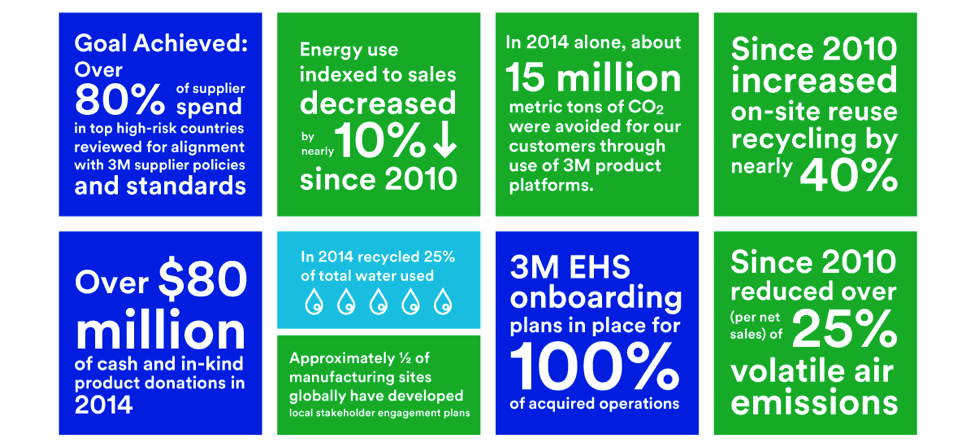
Image Source: 3m.com
By clearly stating its objectives, this program went on be extremely successful and has even won accolades.
3.
A Single-Minded Focus On The Objectives
People tend to do best when they focus on one thing at a time. Organizations, which are effectively large numbers of people working together, don’t get very far with CSR programs that seek to tackle disparate social issues.
There are exceptions, of course, but most organizations that lead the pack in CSR usually focus all their manpower and resources on a singular issue. Set up in 1996 by Anand Mahindra, Nanhi Kali is a Mahindra & Mahindra CSR initiative that supports the education of over 11 lakh girls across ten states.
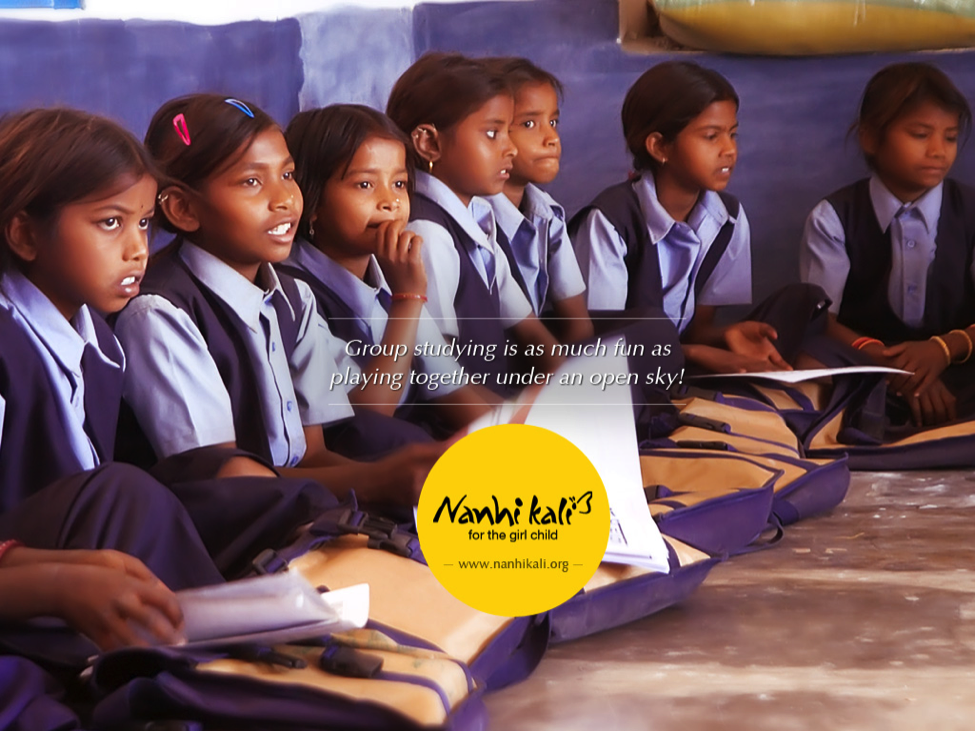
Image Source:
http://www.nanhikali.org
Through the supply of material and academic support, Nanhi Kali has achieved both an increase in enrolment of girls in schools as well as reducing dropouts to about 10%.
4.
Playing To The Company’s Strengths
Too many CSR programs take off on a tangent completely unrelated to what the company does. The best CSR schemes always directly play off what the business is and what it does. Campbell’s Soup, a Canadian organization, developed the Nourish program that makes long-lasting shelf-stable meals for the sole purpose of feeding the world’s hungry.
For an effective CSR program, ensure that your organization’s business strengths aren’t completely ignored.
Larsen & Toubro, one of India’s biggest construction organizations, committed to building 50 dams in the Palghar district of Maharashtra. This is in line with what L&T does, and also benefits over 75,000 people in the area.
5.
Form Partnerships With Experts
The best CSR schemes need to have credibility in the public eye. To this end, partnering with local non-profit organizations and social work experts is a great idea. Starbucks’ ‘Cup Summit’ saw the company join hands with municipalities, suppliers, recyclers, cup manufacturers, NGOs, and academic experts to develop more easily recyclable cups.
CSR programs are here to stay, and by following these top CSR trends, you can ensure that your organization’s social efforts aren’t in vain.
References:
Image References:
https://flic.kr/p/4eorj6 
 Coal India, TCS, and Infosys were among the other major CSR spenders in the nation.
Most companies tend to invest in CSR activity around their area of operation, and states with a sizeable corporate presence such as Maharashtra, Gujarat, Delhi, Tamil Nadu, Karnataka, and Andhra Pradesh were the biggest beneficiaries.
Some companies, like Axis Bank, chose to spread their CSR budget across the country.
This spate of activity in the inaugural year of the Swachh Bharat-CSR relationship have shown that corporate India can do a lot to develop cleanliness, education, and other social standards across the nation.
Image References:
https://flic.kr/p/sdB1vf
Coal India, TCS, and Infosys were among the other major CSR spenders in the nation.
Most companies tend to invest in CSR activity around their area of operation, and states with a sizeable corporate presence such as Maharashtra, Gujarat, Delhi, Tamil Nadu, Karnataka, and Andhra Pradesh were the biggest beneficiaries.
Some companies, like Axis Bank, chose to spread their CSR budget across the country.
This spate of activity in the inaugural year of the Swachh Bharat-CSR relationship have shown that corporate India can do a lot to develop cleanliness, education, and other social standards across the nation.
Image References:
https://flic.kr/p/sdB1vf  Act of Kindness Aesop
As many of the challenges and parameters to be managed are beyond the realm of things that the businesses do on a day-to-day basis, the end-to-end process might require additional (expert) resources within or outsourced from external agencies. That means additional management costs (for the Giver).
This opens up a new possibility for collaboration – Collaboration amongst the Givers.
When the Givers intending to support a common cause come together, leverage their manpower resources and management processes as a ‘Consortium’ (akin to the consortium funding practices in the for-profit sector), management of functions such as identifying the right recipient, deployment, monitoring, assessment, evaluation etc. becomes centralised and shared. Together, it would mean conserving precious money – that could be (additionally) made available to further the cause!
Opportunities for collaboration in the Indian non-profit sector – even at the Giver level – are real. Possibilities are endless. It’s about time we do.
Can we?
Act of Kindness Aesop
As many of the challenges and parameters to be managed are beyond the realm of things that the businesses do on a day-to-day basis, the end-to-end process might require additional (expert) resources within or outsourced from external agencies. That means additional management costs (for the Giver).
This opens up a new possibility for collaboration – Collaboration amongst the Givers.
When the Givers intending to support a common cause come together, leverage their manpower resources and management processes as a ‘Consortium’ (akin to the consortium funding practices in the for-profit sector), management of functions such as identifying the right recipient, deployment, monitoring, assessment, evaluation etc. becomes centralised and shared. Together, it would mean conserving precious money – that could be (additionally) made available to further the cause!
Opportunities for collaboration in the Indian non-profit sector – even at the Giver level – are real. Possibilities are endless. It’s about time we do.
Can we?  The decline in child sex ratio (defined as the number of girl per 1000 boys in the age group of 0 to 6 years) in India is overwhelming. The ratio saw a decline from 945 in the year 1991 to 927 in the year 2001. Its further decline to 918 in 2011 is disturbing as it’s symptomatic of the state of women’s disempowerment in the country.
Rigorous and collaborative effort towards the protection and empowerment of girls across the country is the need of the hour. The present government, lead by PM Narendra Modi, has announced the ‘Beti Bachao, Beti Padhao’ initiative with the following objectives:
The decline in child sex ratio (defined as the number of girl per 1000 boys in the age group of 0 to 6 years) in India is overwhelming. The ratio saw a decline from 945 in the year 1991 to 927 in the year 2001. Its further decline to 918 in 2011 is disturbing as it’s symptomatic of the state of women’s disempowerment in the country.
Rigorous and collaborative effort towards the protection and empowerment of girls across the country is the need of the hour. The present government, lead by PM Narendra Modi, has announced the ‘Beti Bachao, Beti Padhao’ initiative with the following objectives:


 Because of the nature of the work, these relationships tend to be relatively more personal, which fosters a sense of trust between the parties involved.
This helps the decision-making process and ensures accountability. A relationship built on personal rapport and open dialogue is absolutely essential for an NGO to strengthen its operations.
Improvement of Techniques
Even if an NGO does not plan on expanding operations significantly, there is always a necessity to improve internal processes.
Growth gives donors and other stakeholders a reason to invest their money in the organisation.
Most donors choose to support NGOs that are working for a cause which aligns with their beliefs. If they notice that the organisation is growing, it’s sure to spark their interest and help the organisation secure a reliable source of money.
Figuring out a Source of Finance
The most important factor that determines the sustainability of an NGO is the source of its funds.
Gift-based
A vast majority of NGOs are gift-based, and receive their funds in a variety of ways, including one-off gifts, personal donations, and by hosting fundraising events.
While it’s difficult to obtain funds through this method, the main advantage is that the organisation receives what’s called ‘free money’ or unrestricted funds. This means that they’re free to use the funds in any way they please, for the development of the NGO and its projects.
Because of the nature of the work, these relationships tend to be relatively more personal, which fosters a sense of trust between the parties involved.
This helps the decision-making process and ensures accountability. A relationship built on personal rapport and open dialogue is absolutely essential for an NGO to strengthen its operations.
Improvement of Techniques
Even if an NGO does not plan on expanding operations significantly, there is always a necessity to improve internal processes.
Growth gives donors and other stakeholders a reason to invest their money in the organisation.
Most donors choose to support NGOs that are working for a cause which aligns with their beliefs. If they notice that the organisation is growing, it’s sure to spark their interest and help the organisation secure a reliable source of money.
Figuring out a Source of Finance
The most important factor that determines the sustainability of an NGO is the source of its funds.
Gift-based
A vast majority of NGOs are gift-based, and receive their funds in a variety of ways, including one-off gifts, personal donations, and by hosting fundraising events.
While it’s difficult to obtain funds through this method, the main advantage is that the organisation receives what’s called ‘free money’ or unrestricted funds. This means that they’re free to use the funds in any way they please, for the development of the NGO and its projects.
 If an NGO’s model is based on monetary gifts, it’ll need to take certain steps to ensure a steady supply of money to carry out their operations.
The foremost of these is building strong personal relationships with a variety of people. Promoting its name and brand to ensure that it has the widest public reach possible also helps. As a cautionary measure, excess funds should be set aside as reserve, in case the organisation encounters a dry spell.
Direct Official Aid
Some NGOs rely on direct official aid to fund their projects. The benefit here is that they’ve got a steady flow of income to rely on throughout the year. But there’s a drawback: most official donors specify the purpose for which their funds need to be used, and that may not always be in alignment with the NGO’s mission.
So, organisations looking for official financial aid need to strike a balance between procuring funds and sticking to their mission statement.
These are just a few steps that NGOs can use to bring about a more sustainable future. It’s essential that NGOs conduct their processes with a long-term vision in mind, because without a plan, the organisation will perish.
References:
If an NGO’s model is based on monetary gifts, it’ll need to take certain steps to ensure a steady supply of money to carry out their operations.
The foremost of these is building strong personal relationships with a variety of people. Promoting its name and brand to ensure that it has the widest public reach possible also helps. As a cautionary measure, excess funds should be set aside as reserve, in case the organisation encounters a dry spell.
Direct Official Aid
Some NGOs rely on direct official aid to fund their projects. The benefit here is that they’ve got a steady flow of income to rely on throughout the year. But there’s a drawback: most official donors specify the purpose for which their funds need to be used, and that may not always be in alignment with the NGO’s mission.
So, organisations looking for official financial aid need to strike a balance between procuring funds and sticking to their mission statement.
These are just a few steps that NGOs can use to bring about a more sustainable future. It’s essential that NGOs conduct their processes with a long-term vision in mind, because without a plan, the organisation will perish.
References:
 In 2016, companies will be looking to tie up with governments to further their CSR efforts. Not only does this build rapport with the government, but it makes it a lot easier to find a social cause to work towards.
Also, thanks to the combined effort from both parties, companies will be able to ensure that their technology, expertise, and monetary resources are put to good use.
Employees Will Have A Greater Say
2016 will see a rise in the number of companies that consult their employees about the issues they wish to tackle with CSR efforts, and with whom to partner up to deal with the problem.
Instead of the top management calling all the shots when it comes to CSR funding, employees will have a greater say in the matter.
Deloitte’s Millennial Survey 2015 revealed that millennials today want to work for a company that imbues them with a strong sense of purpose. They want to know that their employers are contributing to local communities and to society at large, and wish to be a part of the contribution.
The only way they can do this is if the management delegates some authority of their CSR functions to the employees. This way, everyone working in the organisation is content, which ultimately helps the organisation function better.
Increased Transparency
With CSR laws becoming more stringent, companies need to be more transparent in their dealings.
Since unethical sourcing isn’t acceptable to many consumers, the companies stand to lose out on revenue unless they make changes to their supply chain. This is already visible in the Garment Industry, Large Retailers etc.
Transparency helps reduce practices that may be detrimental to society and the environment. That’s why in 2016, most companies plan to be more transparent in their operations.
Better Quality of products & services
With Companies implementing CSR policies it is important for the company’s products & services to meet the consumer’s expectation on quality. Else it would be an oxymoron type of a situation where on the one hand the Company claims to be socially responsible and on the other hand provides inferior quality of products and services.
Stakeholder engagement
Companies, as they understand the concept of social responsibility and its benefits will look at the various stakeholders. This will reveal issues that could potentially adversely affect in the near future. Companies could then engage proactively through CSR programs to mitigate potential conflicts.
These are a few of the trends that will transform how CSR is approached by businesses. The importance of CSR is growing, and it’s only a matter of time before it becomes a greater part of a company’s responsibility to all its stakeholders
References:
In 2016, companies will be looking to tie up with governments to further their CSR efforts. Not only does this build rapport with the government, but it makes it a lot easier to find a social cause to work towards.
Also, thanks to the combined effort from both parties, companies will be able to ensure that their technology, expertise, and monetary resources are put to good use.
Employees Will Have A Greater Say
2016 will see a rise in the number of companies that consult their employees about the issues they wish to tackle with CSR efforts, and with whom to partner up to deal with the problem.
Instead of the top management calling all the shots when it comes to CSR funding, employees will have a greater say in the matter.
Deloitte’s Millennial Survey 2015 revealed that millennials today want to work for a company that imbues them with a strong sense of purpose. They want to know that their employers are contributing to local communities and to society at large, and wish to be a part of the contribution.
The only way they can do this is if the management delegates some authority of their CSR functions to the employees. This way, everyone working in the organisation is content, which ultimately helps the organisation function better.
Increased Transparency
With CSR laws becoming more stringent, companies need to be more transparent in their dealings.
Since unethical sourcing isn’t acceptable to many consumers, the companies stand to lose out on revenue unless they make changes to their supply chain. This is already visible in the Garment Industry, Large Retailers etc.
Transparency helps reduce practices that may be detrimental to society and the environment. That’s why in 2016, most companies plan to be more transparent in their operations.
Better Quality of products & services
With Companies implementing CSR policies it is important for the company’s products & services to meet the consumer’s expectation on quality. Else it would be an oxymoron type of a situation where on the one hand the Company claims to be socially responsible and on the other hand provides inferior quality of products and services.
Stakeholder engagement
Companies, as they understand the concept of social responsibility and its benefits will look at the various stakeholders. This will reveal issues that could potentially adversely affect in the near future. Companies could then engage proactively through CSR programs to mitigate potential conflicts.
These are a few of the trends that will transform how CSR is approached by businesses. The importance of CSR is growing, and it’s only a matter of time before it becomes a greater part of a company’s responsibility to all its stakeholders
References:
 One such program is the LivingValues movement (www.vset.org), where collaboration between various Non-profit organisations has helped increasing the reach of the program ten-fold within a short span of time. Global Action on Poverty (www.globalactiononpoverty.org) is another example where non-profit organisations are brought under one roof to share their experiences, learn / collaborate each other to improve the social impact.
Collaboration amongst the non-profit organisations is the need – It is bound to improve the efficacy of the sector, and make the whole greater than the sum of its parts.
Can we?
One such program is the LivingValues movement (www.vset.org), where collaboration between various Non-profit organisations has helped increasing the reach of the program ten-fold within a short span of time. Global Action on Poverty (www.globalactiononpoverty.org) is another example where non-profit organisations are brought under one roof to share their experiences, learn / collaborate each other to improve the social impact.
Collaboration amongst the non-profit organisations is the need – It is bound to improve the efficacy of the sector, and make the whole greater than the sum of its parts.
Can we? 
 Compared to 2013 and 2014, organisations have spent considerably more on CSR in the 2015 financial year. And whether this is voluntary or not, it’s actually happening.
At one point of time, most of the private sector wasn’t concerned about CSR. As for the companies that were, CSR didn’t really form a major part of their budget. But with the 2% rule, the Companies Act has ensured that any organisation liable to engage in CSR is spending enough money to make a tangible difference in society.
According to GayatriSubramaniam, convener and CPE at IICA, there has been a shift in the sands. From being an inconsequential part of anorganisation’s budget, CSR has become an important boardroom topic. With the regulations set by the government, the board needs to be actively involved in setting up CSR committees and approving the strategies conceived by them.
Another thing to note is that the Companies Act directs organisations to take any profits from their CSR activities and put them back into the CSR budget. This encourages businesses to engage in innovative CSR programs with high ROI, making it easier for them to meet the required CSR expenditure in the next financial year.
Compared to 2013 and 2014, organisations have spent considerably more on CSR in the 2015 financial year. And whether this is voluntary or not, it’s actually happening.
At one point of time, most of the private sector wasn’t concerned about CSR. As for the companies that were, CSR didn’t really form a major part of their budget. But with the 2% rule, the Companies Act has ensured that any organisation liable to engage in CSR is spending enough money to make a tangible difference in society.
According to GayatriSubramaniam, convener and CPE at IICA, there has been a shift in the sands. From being an inconsequential part of anorganisation’s budget, CSR has become an important boardroom topic. With the regulations set by the government, the board needs to be actively involved in setting up CSR committees and approving the strategies conceived by them.
Another thing to note is that the Companies Act directs organisations to take any profits from their CSR activities and put them back into the CSR budget. This encourages businesses to engage in innovative CSR programs with high ROI, making it easier for them to meet the required CSR expenditure in the next financial year.
 Most companies in India run their CSR activities through NGOs. This has has also managed to somewhat alleviate the funding problem faced by many of these institutions.
A majority of CSR expenditure in 2015 went towards education, skill development, and healthcare. The Bharti Group, for instance, has committed to spending close to INR 100 crore on building toilets in Punjab’s rural households.
Perhaps the most encouraging trend this year has been the exponential increase in the CSR budget of industry leaders. For example, Infosys has spent around 240 crores in 2015, compared to 9 crores in 2014. And Wipro has spent 132.7 crores, compared to 16 crores last year.
Another thing that’s worth mentioning is that even though there is no penalty for non-compliance of CSR rules, most SMEs and larger organisations have done their bit to meet the 2% requirement.
Most companies in India run their CSR activities through NGOs. This has has also managed to somewhat alleviate the funding problem faced by many of these institutions.
A majority of CSR expenditure in 2015 went towards education, skill development, and healthcare. The Bharti Group, for instance, has committed to spending close to INR 100 crore on building toilets in Punjab’s rural households.
Perhaps the most encouraging trend this year has been the exponential increase in the CSR budget of industry leaders. For example, Infosys has spent around 240 crores in 2015, compared to 9 crores in 2014. And Wipro has spent 132.7 crores, compared to 16 crores last year.
Another thing that’s worth mentioning is that even though there is no penalty for non-compliance of CSR rules, most SMEs and larger organisations have done their bit to meet the 2% requirement.
 There’s still a lot of scope for innovation when it comes to CSR in India. However, it’s too early to gauge how companies will spend on CSR in the coming years. But one thing is for sure—CSR is no longer a vague corporate term. It’s a business priority, and it’s here to stay.
References:
There’s still a lot of scope for innovation when it comes to CSR in India. However, it’s too early to gauge how companies will spend on CSR in the coming years. But one thing is for sure—CSR is no longer a vague corporate term. It’s a business priority, and it’s here to stay.
References:


 Before 2013, many organisations in India were not sure exactly how and why they should go about a CSR strategy. Many were under the impression that CSR has little to no returns. However, major organisations like Tata, Infosys, and Coca Cola have run successful CSR programs, which not only helped to boost their brand image, but also generated sizeable returns. With the benefits clear for all to see, other companies have followed also suit.
.JPG)


