Building A Better Future: CSR And The Indian Education Sector

India is home to more than 400 million children. This is 30% of the country’s total population. Out of these, over 100 million have never been to school. This means that one in every four children in our country has had no access to formal education. But the problem doesn’t stop there. The world average literacy rate stands at 84% and India’s average lies well below that number at 74%. According to UNICEF studies, the dropout rates in India are unusually high. Around 80 million children are not even completing elementary school and 8 million others drop out at various levels. In fact, the dropout rate amongst adolescent girls is as high as 63.5%. This means that more than a fourth of our country’s future workforce will not be capable of holding the jobs meant for them. How can CSR help change the education scenario in our country? And why should companies use their CSR money in education? Let’s take a look.

Securing Your Business’ Future

Most businesses strive to impact areas which have a correlation with their own business goals, and education is usually an important part of their plan. By sponsoring educational activities, companies can hire students that show high potential. Building a more educated workforce is extremely important and by doing this organisations can move towards specific goals and targets in the education ecology. Project Genesis, run by Infosys, helps in developing the skill of the non-engineering graduates to ensure that they meet industry requirements. Through this scheme, they enabled 16,762 students to gain access to jobs in the IT sector.

Creating An Impact That Lasts

A key aspect of CSR in the education sector is following up on monetary and infrastructural handouts. For example, the Mahindra Satyam Computer Literacy/Distribution Program not only distributed over a 1000 computers to government/corporation schools, but also sends volunteers to conduct computer training programs for both students and teachers in these schools. And in a bid to rapidly improve their workforce’s skill base, HCL’s Teach At Office program provides support staff with a range of workshops on basic etiquette, financial management, and health and hygiene. They are also taught basic computer skills and are trained in conversational English. This not only helps them become more dedicated employees, but empowers a section of society that is increasingly neglected in a tech-dominated world.

Raising The Infrastructural Bar

Investment from private and public companies can dramatically enhance the quality of education in a very short time. Especially since the biggest factor when driving nationwide educational reform is financial backing, needed to strengthen the educational infrastructure in underdeveloped regions. Corporate India can contribute towards a change as it is equipped to provide these skill set rather than the NGOs and Govt. They can also provide highly effective teaching aids and other resources, and through partnerships with the government, play a vital role in higher education too. Cognizant, for example undertakes extensive infrastructural projects like rebuilding classrooms and setting up teaching labs. In 2011, they undertook 146 such projects across the country. But they aren’t the only ones investing in India’s educational foundations. IBM, with the help of its Reinventing Education Program has integrated Information and Communication Technology and pedagogy tools in 50 government schools to make learning fun and simple. Aside from that, with the Transformed Classroom model, they have managed to empower over 600 teachers and given over 7000 students in 90 schools a better standard of learning.

A Multitude Of Returns

Most educational CSR initiatives can assist companies to sustain long term growth and profitability and increase their level of acceptance among local populations. Through this they can meet their CSR requirements and can potentially operate with an increased ability to hire and retain employees, fulfilling growth targets at a much faster pace. Apart from the fact that involvement in educational development brings in heaps of goodwill, corporates also have the opportunity to raise public awareness about issues faced by our education system.

Image References

Growing Responsibly: Using CSR To Boost Your Business

Most executives, when asked about CSR, will tell you that it’s nothing different from donating to charity. Some will even say that it’s a fad. However, there are a few who look at it as a creative opportunity to take their organisation to the next level. These are people who have identified CSR as a way to give back to society and achieve incredible returns at the business end as well. Savvy business leaders have also understood that corporate actions towards CSR boosts return on investment. Vardaan believes that in the long run the spending on CSR yields many fold returns – both tangible & non tangible With the 2013 Companies Act in place, businesses have gone into overdrive, designing and implementing CSR strategies to cement their place as a responsible and socially aware organisation. At Vardaan, Social Responsibility is not just considered as a statutory compliance need; it’s embedded deep into the DNA of an organization when earning responsible profits. Let’s take a look at how CSR can be highly advantageous to your organisation and its growth.

Getting Closer To Your Customer

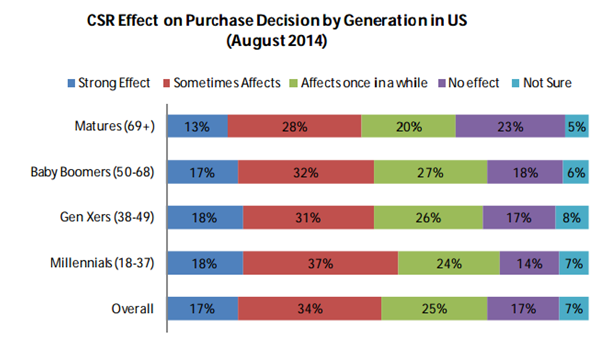
Every company knows how hard it is to gain customers and retain them for a long time. CSR can help businesses reel in customers with relative ease, and keep them engaged for the long run. According to studies done in 2012 by Cone Communications and the results of the 2012 Corporate Social Return Trend Tracker, 86% of respondents were more likely to trust companies that reported the results of their CSR efforts. In addition, 82% of those surveyed were also more likely to purchase products or services from companies that demonstrated their CSR results over those that didn’t. People want to support businesses that do good for the community, because if they help the organisation, they indirectly help themselves. Just to reiterate how important customer engagement is, 40% of those surveyed would not even consider purchasing from companies which didn’t publish their CSR results. If an organisation does careful market research, and involves itself—transparently— in a socially relevant cause, it could lead to a massive increase in its consumer base.

Saving More Than You Spend

The beauty of CSR lies in the countless ways in which it can be implemented. You don’t always have to look for something on the outside to invest in. Allocating capital towards little things like recycling of waste or alternative sources of energy can save you a lot more money than you expect. Smart businesses not only recycle waste but also try & use the waste to incorporate it in its business model. And if this happens in a manufacturing process it hugely impacts the bottom- line. Energy costs are extremely high these days and any organisation can reduce this expenditure by implementing energy efficiency programs in their businesses. Not only do you conserve precious energy resources, you’re setting up a system that leads to huge savings at the end of the year.

Bringing In The Money

A well-designed CSR strategy can be perfect bait for big investors. Being involved with a social cause outside your business domain makes you competitive and reduces the risk of sudden damage to your reputation, and your sales. Most investors will see this and readily invest in your company. Adeline Hinderer, Trade Counselor for the European Union to the US, says, “Companies are actively demonstrating to investors that corporate social responsibility makes good business sense, and the firms are already seeing the benefits it can bring them in terms of risk management and attracting investment.” Additionally, investors are more likely to give money to businesses which are involved in supporting a cause they also support.

Working For A Cause

A survey on employee engagement by CRStrategies and Mandrake came up with these results –

● 44% of young professionals said they would discount an employer with a bad reputation and nearly half said corporate social responsibility policies   should be compulsory ● Seven out of 10 employees in organizations that are viewed by employees as socially responsible rated senior management as having high integrity compared with just one in five employees who were negative about their employer’s CSR record. ● 80% of respondents would prefer working for a company that has a good reputation for environmental responsibility.

People want to work for an organisation which is socially aware and actively involves itself in supporting a cause. In fact, in a Net Impact survey, 53% of workers said that a job where they can make a social impact was important to their happiness, and 72% of students about to enter the workforce agreed. Many were even okay with a pay cut to work for an organisation which was more socially responsible. Think of CSR as a long-term investment and more importantly, a serious business growth strategy. In the process of helping a community or sustaining the environment, what you actually end up doing is responsibly sustaining the future of your business.

Image References

India’s Answer To Corporate Apathy — The CSR Mandate

In 2013, the Government of India passed a mandate that made CSR spending obligatory for many organisations in the country. By and large, this rule ushered in a new era of corporate social responsibility and pumped some coin into the cobwebbed coffers of Indian nonprofits. The organisations that tirelessly sought to make a difference now had plenty of resources to do so, thanks to the big corporates that were eager to lend them funds. csr-mandate But most nonprofits had inadequate capacities and weren’t capable of effectively handling the sudden surge of financial aid. This meant that corporates also needed to help their beneficiaries with capacity building—monetary aid wasn’t the only answer. In order to do this effectively, organisations had to first create clear-cut CSR policies that defined core objectives. Moreover, they also required measurement models that could accurately evaluate the efficacy of social programs. As many corporates weren’t fully aware of the intricacies within the CSR domain, they sought professional help. Vardaan has been providing end-to-end consulting services to organisations in this regard. The CSR mandate has resulted in a number of positive changes all over the country. But before we get right into them, let’s take a look at how the Act actually works. The 2% Mandate Giving back to society If a company has a net profit of ₹5 crore or more per year, then it needs to spend at least 2% of its average net profits from the preceding three years on social initiatives. The rule also applies to companies that have annual turnovers of ₹1000 crore or are valued at over ₹500 crore. Now, corporates pay a 30% tax in India, which can turn out to be quite a hefty figure for companies with large incomes. But the CSR mandate states that corporates need to pay 2% of their profits before being taxed. Which means that they shell out almost 2.857% of their profits in reality. A company’s CSR spending cannot be deducted from its taxable business income. This is because CSR expenditure is seen as an application of income, which is not tax-deductible under Indian law. Apart from increasing corporate spending, one of other main aims of the 2013 act was to bring SMEs into the CSR mix. Large-Scale Contribution Of The SME Sector SME Growth SMEs undoubtedly have a large influence on the country’s economy, and they can potentially be just as impactful in bringing about social change—according to a 2013 survey, nearly 40% of India’s workforce is employed by these organisations. Many SMEs conduct their business activities in proximity to rural communities and are collectively more aware of the community’s needs. This allows them to tailor realistic social programs that create the necessary impact. After the 2013 mandate, any company with a net profit of ₹5 crore or more had to participate in CSR activities. The Act ensured that these organisations could collectively pool their resources in order to create a sizeable CSR fund. This kind of an alliance proved to be highly beneficial to SMEs, allowing them to reduce their operational costs. In addition, they have also been able to focus more on developing long-term projects that need more resources to be accomplished. Due to the CSR mandate, SMEs in the country are today promoting a variety of causes such as education, environmental sustainability and gender equality. Increased Domestic CSR Expenditure CSR Expenditure Given their higher levels of regulation, it may be understandable that foreign companies end up spending more on CSR initiatives than Indian organisations. The average CSR expenditure by foreign firms has been significantly more than their Indian counterparts in both, 2011 and 2012. But in 2013, the average CSR expenditure by Indian firms rose by about 700%, comfortably outstripping foreign MNCs. In one way, the mandate has definitely improved the engagement levels of Indian organisations in social causes. Although the CSR mandate has created a positive impact in India, there’s still a lot that needs to be done. Tackling the inadequate capacities of Indian nonprofits is a particularly major challenge. After all, nonprofits are ever at the forefront of social change, and in better shape, they can help corporates work some real CSR magic.

Hot On The Heels Of Change—5 Insights From The 2015 AVPN Conference

Intentions and results are inextricably connected. If you intend to do something, then you better do it —there’s little point otherwise. All non-profits have good intentions, but very few actually end up achieving what they set out to do in the first place. From unsupportive grant makers to insufficient talent, a host of problems constantly threaten to derail their progress. Venture philanthropy is an approach conceived by those looking to fix the spate of issues that NGOs frequently face. And in our part of the world, there’s no better way to imbibe ideas of venture philanthropy than by attending the AVPN Conference. One of the Asian Venture Philanthropy Network aims is to equip NGOs with the right kind of knowledge and skillsets. This year, they held a massive conference where 478 dedicated delegates gathered under one roof to grapple with common hurdles. At Vardaan, we were glad to be one of the 304 organizations attending this event. Here’s what we learnt from it. Insight 1 – Embracing Venture Philanthropy EMBRACING VP Increasing the flow of intellectual, human, and financial capital to the social sector is a pretty difficult task. And since venture philanthropy practices aim to do just that, we’ve decided to evolve our approach a little bit. Advising social enterprises and raising funds for them will be our two new areas of practice. In other words we intend to tap into this fast emerging sector in the Indian landscape which will have a profound social impact in the years to come. Insight 2 – Being A Bit More Subtle avpn 2 Sometimes, in order to have dessert, you need to plow your way through the main course. The same logic applies to the trickier aspects of social change—in order to have the necessary impact, your efforts may need to be indirect. For instance, if your actual plan is to help a community become more self-sufficient, then your initial aim should be to build better houses for the members. Identify that one thing which everyone in the community is desperately in need of, and get busy trying plug that gap. Once you gain the trust of community members, it becomes much easier to achieve your long-term objectives. Insight 3 – Keeping Donors In The Loop avpn It’s the donors that pump life into every nonprofit. And understandably, not all NGOs know how to deal with them in the best manner possible. The idea is to involve the donor in each and every step of the project being undertaken. This way, the contributor’s perception of your efforts aren’t based only on results, which sometimes may not be that appealing. In one survey, nearly 82% of NGOs agreed that they needed smarter, more engaged donors, while more than 90% of donors felt that they required more data and better opportunities. Clearly, there’s a gap that we need to address here. Insight 4 – Companies Need To Engage Their Customers engage their customer Big companies in the fashion, airlines, hospitality, and film industries often have deep engagement levels with high-net-worth individuals (HNIs). Such organizations need to make their customers an active part of their CSR endeavours. Not only does this lead to better funding, it also provides more incentive for companies to engage themselves in social initiatives. Insight 5 – Building Organizational Capacity last Non-profits require all the talent that they can get their hands on. But as the problem often lies, they may not always have the money to pay the salaries of their employees. This can be quite demanding for a person who’s already doing a lot without expecting much in return. Ensuring that key staff members receive their monthly income is an effective way to build capacity. It’s also important to build a proper network and maintain long-term relationships. Trust us when we say that sometimes, all it takes is one phone call to make a lasting change in the lives of millions. Here are few photographs from the AVPN Conference’ 2015 which Vardaan attended.

India Inc and CSR: A Complicated Relationship

The relationship between Indian corporations and CSR activities has taken a complete U-turn over the past decade; the importance of social contributions has skyrocketed. Every major company today is finding creative and unique ways to implement CSR directives. Glaxosmithkline, for example, exclusively focuses on health and healthy living. The company establishes programs in tribal villages where they offer medical check-ups, treatment, health camps and health awareness drives. They also provide money, medicines and equipment to non-profit organizations that work towards improving health and education in underprivileged communities. The Reliance Industries’ ‘Drishti Project’, focuses on treating visually challenged people from economically weaker sections of the society.   csr-in-india The Mandate Traditionally, most Indian companies have been known to be very stingy with their contribution to society in terms of Corporate Social Responsibility. This changed with the passing of the Companies Act, 2013. The act makes sure that every corporate earning a net profit of more than INR 5 crore, or a turnover exceeding INR 1000 crore, spends at least 2% of its average net profits, from the last three fiscal years, towards CSR activities. This initiated a barrage of CSR initiatives by major companies in the country, which not only provided much needed development to weaker sections of society, but also helped create a favorable corporate image in the mind of the consumer. Importance of CSR   A Change In The Tide While CSR wasn’t a very big part of running an organisation back in the day, it has proved integral to the growth of some of the biggest companies in our country. Tata is well known for being actively involved in giving back to the community, and the development of infrastructure. When other organisations were trying to find ways to escape spending money on sustainability and social work, Tata was busy setting up hospitals and research stations. Let’s take ITC as an example. Being a highly-varied conglomerate, they needed to isolate the taboo associated with their tobacco units and make sure it didn’t stain their image across different sectors. To do this they introduced a unique CSR strategy in the form of the 1 Rupee scheme. Classmate, ITC’s line of stationery products, gives INR 1 towards the education of underprivileged children from the sale of each Classmate notebook. Through this scheme, ITC ended up contributing over INR 214 crore towards CSR in 2014-2015. Not only did this scheme increase the sales of Classmate notebooks, but also managed to substantially dilute the cigarette taboo linked to their products. This is just one example of how CSR can be seamlessly incorporated into company operations. It’s arguably one of the best ways to increase stakeholder retention, as it is a visible effort from the organisation to give something back to society. Why Invest In CSR? A study by Hewitt & Associates found that morale was 55% better, business process were 43% more efficient, public image was 43% stronger, and employee loyalty was 38% better in organisations with strong CSR programs. Many organisations don’t see how easy things like customer engagement become, if they put in a little effort into designing and implementing new and innovative CSR strategies. For example, Walmart is one of the loudest voices in environmentalism. They’ve run ad campaigns to raise awareness about sustainable product choices that customers can make while shopping at their stores. With minimum expenditure, they found a way to do something ‘good’ which helped them grow their consumer base on the side. You can even use it as a tool to differentiate yourself from your competitors. PepsiCo and Coke have been relentless in trying to up each other with their CSR activities. Coke has a tie-up with WWF, where they engage in protection of fresh-water sources, and replenishment of ground-water. PepsiCo too runs sustainable agriculture programs which not only help small farmers, but also help secure a supply of raw material to the company’s manufacturing plants. Companies actively involved with CSR find it easier to recruit employees, even in tight labour markets. Employees tend to stick around longer with such organisations, leading to increased employee retention, which also cuts down largely on recruitment and training costs. In fact, a survey by Net Impact found that 35% of workers would take a pay cut to work for a company committed to CSR. How Can CSR Work For You? The Reputation Institute’s 2011 ‘Pulse Survey’ found that CSR is responsible for more than 40% of a company’s reputation. At Vardaan, we specifically deal with CSR management and offer all-round solutions on how to achieve CSR objectives. Trust us when we tell you that the days of simply donating a cheque are absolutely over. Even with hundreds of corporations actively investing more time and resources into their CSR initiatives—some with full-fledged social responsibility departments—there are certain firms that are relatively apathetic about creating real social change. What needs to change is the mindset that CSR is just another scheme to drain money out of the company, without any tangible short-term or long-term benefits. An effective CSR system not only helps society, but can also increase profit margins and generate immense goodwill. It may not be the only way to get the same results, but is definitely the easier and more socially responsible way of taking your organisation where you want it to go.

What You Ought To Know About The CII CSR Summit & NGO Mela 2015

  CII CSR Summit & NGO Mela 2015 Big buzz in the room…. Many hopeful and expectant participants…. Looking forward to the first ever conference since the mandate on the CSR spend organized by CII in Bangalore. And the theme was very relevant “Social Impact through Partnership between Governments, Corporate and NGOs”. More than 200 people were gathered and 40 plus NGOs had setup their tables in the NGO Mela. Spread over half a day and power packed with some of the big names who are involved in influencing the transformation and hopes of CII playing big role in driving the change in owning the issues in the society. This looked like a great beginning. And we also want to be part of it. After the Companies Act was passed in 2013, corporate social responsibility became a priority for every big company in India. Our consulting company Vardaan advices corporates, not for profits, social enterprises for maximising returns, capacity building to create social impact. This year, we decided to attend the CII conference to see how we could improve our impact assessment skills. This is what we found out. The Bigwigs Speak Out As we made our way to the venue of the Summit, we noticed the presence of more than 200 participants. One of the speakers for the day was Rajni Mishra, the Chief General Manager of SBI. Being a Government-owned bank, the SBI has a 1% CSR spending mandate as opposed to private-sector companies which need to spend at least 2% of their annual revenues on CSR activities. According to Mrs. Mishra, the SBI had spent around Rs 15 crore on building toilets for schoolgirls around the country. She also emphasized the need for programs like Swachh Bharat that aim to make small but meaningful changes in society. According to her it was a great example of partnership where various bodies could work together and bring huge transformations through such programs in the overall development of the nation. Mohandas Pai, Chairman of Manipal Global Education had a different take on the subject. Mr. Pai was of the view that corporate needs to focus on business and as part of growing their business they need to engage themselves in environmentally sustainable work. However with the mandate in place the best way to bring about change is for groups to work together. He shared the story of how one man’s dream to not have even one child go hungry paved the path for Akshay Patra and its successful story. He stressed on the importance of CII playing a stronger role in bringing groups to work together on causes; if we have to bring about a significant change in society. NGOs Need Better Ways To Gauge Impact One major topic discussed in the conference was about building the capacities of NGOs to better understand the impact of their projects. The Centre For Social Initiative and Management offered a few interesting impact assessment models to consider. This organization works with NGOs to help them accomplish their long-term goals and has an impressive roster of clients. Rang De, one of CSIM’s clients, shared their impact assessment story with us. Although their efforts were commendable, we weren’t really sure as to how they arrived at certain conclusions. There was a lot of talk about quantitative assessment at the conference, but we still feel that there’s more to it than just that. Bridging The Skills Gap The other main topic of discussion was the shortage of skilled labour. Most of the participants at the summit found that dealing with this problem was not as easy as it seemed. One idea was to bridge the skills gap by building sustainable partnerships between NGOs, corporates, and the government—many were still skeptical, though. However, the story of Labournet Services resonated well with the audience. GayatriVasudevan, the CEO of the organization, explained how Labournet is today a platform for unorganised labour sectors to develop skilled workforces. She’s accomplished this by working with both the private sector and the state to create relevant and industry-specific training modules. Others too felt that Industrial Training Institutes were essential to tackling to this problem, but stressed the challenge in finding employment for the newly trained. In this vein, Bosch, the German MNC, shared some of their vocational training models with the participants. On the whole, the CII conference turned out to do exactly what it was to supposed to—it brought together a bunch of CSR-friendly organizations and hosted an enlightening discussion on how to maximize the impact of various CSR initiatives. And at Vardaan, we’ll be working hard to make sure our insights help your programmes in every way possible.

The Quick Fix To India’s Inefficient CSR Reporting

The latest upgrade to India’s CSR laws targets companies with a net worth of INR 500 crore, revenues of 1000 crore or net profits of 5 crores. It states that 2% of their average profits over the last 3 years need to be spent on improving social conditions, as mandated by the Companies Act 2013. Information like the total amount spent on CSR, the activities towards which the funds are provided, and any unspent amounts have to be disclosed by these companies. And there lies the problem: all the companies have to do is report what they spend on. If they don’t meet the targeted amount, they only need to provide reasons for not doing so. The system seems like it was built to be exploited. It is hard to trigger a social impact or motivate companies toward CSR commitment when the only activity they are required to do is provide CSR reports. And why should reporting figures that comply with CSR rules be difficult? Going by the results of the recent CSR mandate, it isn’t.

Uniformity: The Answer To Chaos

A major issue lies in the fact that CSR reports form part of documents like annual reports, profit and loss statements, director reports, and BRRs. There isn’t a uniform format for all companies to follow while preparing their CSR evaluation. It’s gruelling to keep track of information from various records, and besides, this sort of patchwork reporting is likely to throw up a bunch of inconsistencies. For example, Tech Mahindra clubbed its CSR expenditure with its overhead costs, while Infosys published its CSR expenditure in their annual report. This makes it difficult to audit and track the CSR spending of a company. The solution is creating a system that can be utilised by organisations to report their social activities. This will ensure that they’re getting the job done, and if they aren’t, it will show up in the records.

Zero Verification

It’s easy to assess financial claims on the stock market, but what about CSR spending? The lack of impact assessment or strict verification by a third party is another way for companies to evade CSR expenditure. For example, Infosys specified the location of its CSR undertakings, but Tech Mahindra did not. Either way, without a witness to verify their claims, it’s impossible to ascertain the activities they carried out. Stakeholders, customers, and generally anyone interested in the company’s workings have no choice but to believe what they’re being told. To effectively implement CSR practices, the law needs to make it compulsory for companies to spend the specified amount. It has to mandate that companies hire professional staff and seek advice on CSR activities. Third-party verification is useful to see whether the company’s CSR activities are in line with its claims. It’s also of vital importance to measure the actual impact of a company’s CSR actions. That way one can effectively gauge whether the company has actually brought about any social change, or if they’re proficiency lies in filing reports.

They’re Missing The Point!

Reporting isn’t going to help the social state of the country. The law needs to build a system so that companies have no choice but to carry out CSR activities. Companies need to approach it in the way they would a project. This means periodic evaluation and assessment of CSR initiatives. A structured system is crucial to ensure that companies adhere to the rules and actively participate in corporate social responsibility. It’ll take more than resolving a few bugs in the Companies Act to alleviate the state of India’s CSR reporting. But it’s a necessary step towards a more effective and responsible corporate social apparatus.

References: