Corporate Social Responsibility (CSR) is becoming a major part of the business agenda for many corporates in the country. This is especially fueled by Section 135 of the Companies Act of 2013, which made it mandatory for every company having a net worth of rupees five hundred crores or more, or turnover of rupees one thousand crores or more or a net profit of rupees five crores or more to involve itself in CSR activities.
A company’s CSR vision and mission should be added within the very framework of the company to make a substantial change in the socio-economic and environmental challenges that society faces. To achieve this you might need assistance in areas such as environmental impact assessments, social audits, and the measurement of social incomes when it involves third parties. Also various intervention programs for stakeholders need to be partnered with Non–profit & social impact organisations. Herein, it is smart to hire consultants who are thoroughly familiar with the terms and working under CSR. One such firm spearheading the CSR revolution is Vardaan Advisors Pvt Ltd.
Here are the services provided by Vardaan to companies looking to maximise the impact of their CSR activities.
Social Responsibility Advisory
Vardaan’s social responsibility advisory board has ample experience in the industry and will help your business execute or improve their social responsibility programs. We help you create a smarter system to formulate the assessment of protocols and tools. We will assist you with risk analysis, training and education, monitoring, and program management. Our experienced team will help you conduct in-depth research that brings to light key insights to make critical decisions dealing with sourcing and positions as the leader in the supply chain.
CSR Compliance
We offer compliance services in order to understand if your business is aligned with the Companies Act of 2013. Companies that fall under the conditions laid down by this law are required to spend 2% of their profits on CSR and in case they don’t, they will be held accountable for it. We aim to help you with the preparation, implementation, and monitoring the compliance of your program with Section 135. We will assist in implementing a program that is integrated with your value chain, strategic, and is tailored for your business reporting.
Baseline Studies
A baseline assessment is a necessary process to study the existing state of your projects, the business, culture, people, and the demographic information of the village or town that you have chosen to run your CSR project. This assessment will take place before you can start off your program. We will help in gathering information that can strengthen and sustain your program. By carrying out research by collecting data from Government records, relevant articles from the Associated Chambers of Commerce and Industry. We also help you raise awareness about the program via social media, create a clear research design, validate the collected data, and have frequent interactions with your field teams to provide relevant, first-hand information to them.
Assessment of CSR spend
Before you can even start a CSR program, the first step is to consolidate your finances. We offer services to assess the correct bracket for your company’s spending for sustainable CSR. We will help you plan your activities in compliance with Section 135 (1) of the Companies Act 2003.
Recommending the right program and implementing partner
A trustworthy partner who has direct access to your company’s beneficiaries is the key to a successful program. When you assign the servicing of your CSR program, we will also help you find specialised partners to strengthen your program. It is necessary to completely verify the reliability of these partners. We aim to look for partners who have had a positive impact on the society through their programs.
Impact Assessment
Evaluating how effective your current CSR programs are is one of the most important steps towards creating a CSR campaign that actually works. Once the project has been implemented, we will undertake the assessment of the program while engaging with our external partners. These studies will take place at regular intervals. Through these studies, our team will analyse each project and the impact assessment report will be submitted to the board.
We use a diverse range of research tools and methods, depending on the nature of the program and the profile of our clientele. These tools range from interviews to answering questionnaires and will reveal what impact the program has made.
Vardaan’s main aim is to help our corporate clients implement effective and sustainable CSR programs that create a significant difference in the society. This way we help you and help ourselves give back more to the world than we could’ve ever imagined.

 Upma, Chai & Campus Tour
The day began with the 11th graders meeting and getting to know Sandvine volunteers over a breakfast of vermicelli upma and chai. After the breakfast concluded, the 11th grade class took each volunteer on a guided tour of the Shanti Bhavan campus. The tour covered the classrooms, sports arenas, children’s dormitories, and the variety of wildlife on the campus.
Learning the Way of Life @ Shanti Bhavan
Upma, Chai & Campus Tour
The day began with the 11th graders meeting and getting to know Sandvine volunteers over a breakfast of vermicelli upma and chai. After the breakfast concluded, the 11th grade class took each volunteer on a guided tour of the Shanti Bhavan campus. The tour covered the classrooms, sports arenas, children’s dormitories, and the variety of wildlife on the campus.
Learning the Way of Life @ Shanti Bhavan
 After the school tour, the Sandvine volunteers joined the entire school for assembly, which consisted of singing the official Shanti Bhavan school song, a virtue reading on compassion, the daily news presentation, and two songs by the Shanti Bhavan school choir.
Activities and Debates, Galore!
After the school tour, the Sandvine volunteers joined the entire school for assembly, which consisted of singing the official Shanti Bhavan school song, a virtue reading on compassion, the daily news presentation, and two songs by the Shanti Bhavan school choir.
Activities and Debates, Galore!
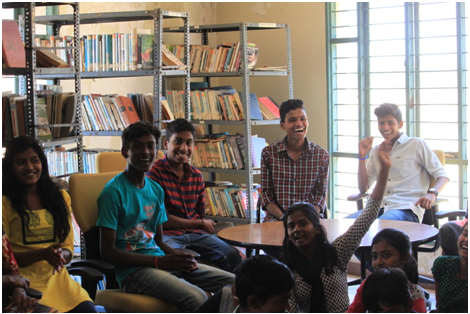
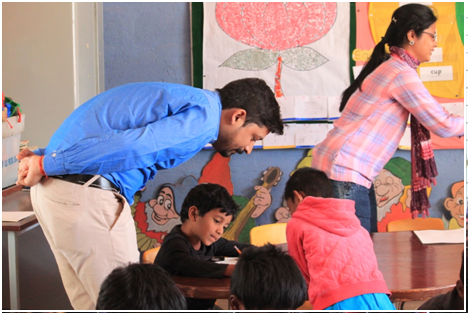
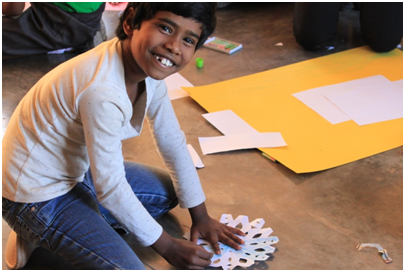 The volunteers then split into groups and picked different grades for their classroom workshops. Beginning with Kindergarten through 4th grade, the Sandvine volunteers conducted anorigami workshop, while the 6th through 9th graderslearnt about the steps of product development, right from the initial idea to finished product. The 10th – 12th grade students participated in a group discussion at the library, lead by two Sandvine volunteers. The discussion was so engaging the students and volunteers continued debating until almost past lunch time! One of the topics discussed was whether the government should have a role in monitoring the media.
What’s an eventful day without some football?
The volunteers then split into groups and picked different grades for their classroom workshops. Beginning with Kindergarten through 4th grade, the Sandvine volunteers conducted anorigami workshop, while the 6th through 9th graderslearnt about the steps of product development, right from the initial idea to finished product. The 10th – 12th grade students participated in a group discussion at the library, lead by two Sandvine volunteers. The discussion was so engaging the students and volunteers continued debating until almost past lunch time! One of the topics discussed was whether the government should have a role in monitoring the media.
What’s an eventful day without some football?
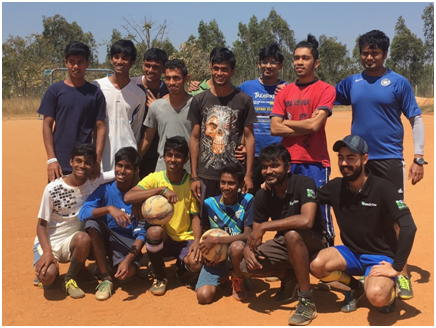 As the workshops were going on, the 11th and 12th grade Shanti Bhavan boys played a difficult match against a fierce team of Sandvine volunteers. The Shanti Bhavan boys ended up pulling through with a win, 6-3, despite the strength of their competitors!
Lunch and goodbyes!
Everyone gathered for lunch in the dining hall to complete a wonderful morning of activities, and fun! Shanti Bhavan served a delicious lunch of puri, cashew rice, raita, daal, and kesari bath. Before departing, the Sandvine volunteers made a generous donation to Shanti Bhavan, which included books for the school library, clothing and games. The Shanti Bhavan students bade farewell to the volunteers, eagerly awaiting their next visit!
As the workshops were going on, the 11th and 12th grade Shanti Bhavan boys played a difficult match against a fierce team of Sandvine volunteers. The Shanti Bhavan boys ended up pulling through with a win, 6-3, despite the strength of their competitors!
Lunch and goodbyes!
Everyone gathered for lunch in the dining hall to complete a wonderful morning of activities, and fun! Shanti Bhavan served a delicious lunch of puri, cashew rice, raita, daal, and kesari bath. Before departing, the Sandvine volunteers made a generous donation to Shanti Bhavan, which included books for the school library, clothing and games. The Shanti Bhavan students bade farewell to the volunteers, eagerly awaiting their next visit!


 The change in law is alerting the corporate segment of India to its wider social responsibilities. Bimal Arora, chair of the Delhi-based Centre for Responsible Business, argues that “the so-called 2% law has brought CSR from the fringes to the boardroom”. Companies, he says, now have to think seriously about the strategies, timelines, and resources needed to meet their legal obligations.
The corporate world, especially in India, has already embraced CSR. Ever since the law was passed, companies have been disclosing environmental and social performance with financial results, which, before the mandate, was practically unheard of.
For example, the Sir Ratan Tata Trust recently gave the Azim Premji foundation $2 billion—the largest philanthropic gift in India. Instances such as this are the reason that some believe the law is a solid one.
Additionally, reports say that last year, a combined net profit of Rs. 4,37,167 crore was gained by listed Indian companies. 2% of this number will yield slightly less than $2 billion a year as a total CSR-spending amount. With such a huge amount produced every year, many of our environmental and social issues are bound to alleviate.
The Law has ensured that there is accountability from the non-profit sector. This will result in non-profits being run on professional lines leading to overall efficiency and impact creation.
The 2% law will ensure sustainability for projects, which was a dire need in the impact & development sector.
The change in law is alerting the corporate segment of India to its wider social responsibilities. Bimal Arora, chair of the Delhi-based Centre for Responsible Business, argues that “the so-called 2% law has brought CSR from the fringes to the boardroom”. Companies, he says, now have to think seriously about the strategies, timelines, and resources needed to meet their legal obligations.
The corporate world, especially in India, has already embraced CSR. Ever since the law was passed, companies have been disclosing environmental and social performance with financial results, which, before the mandate, was practically unheard of.
For example, the Sir Ratan Tata Trust recently gave the Azim Premji foundation $2 billion—the largest philanthropic gift in India. Instances such as this are the reason that some believe the law is a solid one.
Additionally, reports say that last year, a combined net profit of Rs. 4,37,167 crore was gained by listed Indian companies. 2% of this number will yield slightly less than $2 billion a year as a total CSR-spending amount. With such a huge amount produced every year, many of our environmental and social issues are bound to alleviate.
The Law has ensured that there is accountability from the non-profit sector. This will result in non-profits being run on professional lines leading to overall efficiency and impact creation.
The 2% law will ensure sustainability for projects, which was a dire need in the impact & development sector.
 Before the mandate, CSR was already a voluntary part of the various business groups and corporations in India. For example, IBM had worked with the Tribal Development Department of Gujarat as a part of its Corporate Service Corps Programme. They aimed at the upliftment of the tribal people in the Gir forests. The Tata Group, also, performed a range of CSR activities such as providing family planning and health services. Additionally, they organised several relief programmes for natural disasters. Reliance Industries Limited, too, has launched ‘Project Drishti’, a country-wide initiative that helps the visually challenged people of the economically weaker section of society restore their eyesight.
Thus, some believe that the compulsion to undertake CSR activities can be mainly questioned on the grounds that it is inherently contradictory. The law, say some, is ineffective on the basis of practical application.
The 2% law is viewed as an additional tax on Corporates. Alternatively there are no tax exemptions provided on the CSR spend.
In addition, some believe that the law does not lay any provision in regards to enforcement—there are no penalties for non-compliance.
Furthermore, the mandate contains many loopholes that have raised concerns. Since the government has failed to show any specific objective or purpose for the law, many Indian businesses and companies see the 2% provision as unnecessary and impractical. These businesses wish such initiatives were still a voluntary step.
In conclusion, there are clear pros and cons, and the effectiveness of the law is ultimately decided by both the givers and the doers.
References:
Before the mandate, CSR was already a voluntary part of the various business groups and corporations in India. For example, IBM had worked with the Tribal Development Department of Gujarat as a part of its Corporate Service Corps Programme. They aimed at the upliftment of the tribal people in the Gir forests. The Tata Group, also, performed a range of CSR activities such as providing family planning and health services. Additionally, they organised several relief programmes for natural disasters. Reliance Industries Limited, too, has launched ‘Project Drishti’, a country-wide initiative that helps the visually challenged people of the economically weaker section of society restore their eyesight.
Thus, some believe that the compulsion to undertake CSR activities can be mainly questioned on the grounds that it is inherently contradictory. The law, say some, is ineffective on the basis of practical application.
The 2% law is viewed as an additional tax on Corporates. Alternatively there are no tax exemptions provided on the CSR spend.
In addition, some believe that the law does not lay any provision in regards to enforcement—there are no penalties for non-compliance.
Furthermore, the mandate contains many loopholes that have raised concerns. Since the government has failed to show any specific objective or purpose for the law, many Indian businesses and companies see the 2% provision as unnecessary and impractical. These businesses wish such initiatives were still a voluntary step.
In conclusion, there are clear pros and cons, and the effectiveness of the law is ultimately decided by both the givers and the doers.
References:

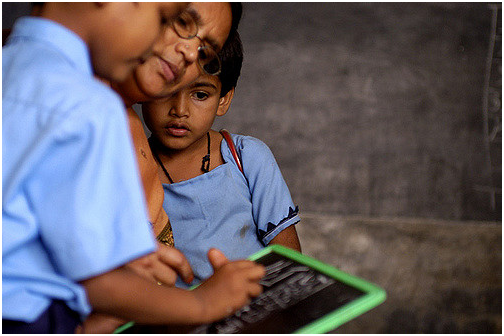 The backbone of every society is education. But what weighs the most is the quality of education. In India, out of the 239 million students enrolled for classes I – XII, only a handful receive the quality education with qualified teachers and education aids. UNICEF states that 40-50 percent of the children from 16-18 years are dropping out of schools to go on to becoming child laborers denying themselves access to quality education.
The Indian corporate sector has a big opportunity to play an impactful role in changing this by adopting different ways to improve the quality of education.
The backbone of every society is education. But what weighs the most is the quality of education. In India, out of the 239 million students enrolled for classes I – XII, only a handful receive the quality education with qualified teachers and education aids. UNICEF states that 40-50 percent of the children from 16-18 years are dropping out of schools to go on to becoming child laborers denying themselves access to quality education.
The Indian corporate sector has a big opportunity to play an impactful role in changing this by adopting different ways to improve the quality of education.

 Research shows that provisioning infrastructure assistance is a popular movement in the education realm, taken by roughly 85% of businesses. The material, teaching supplies, books, furniture and building of libraries and schools, consists of the role of implementing educational infrastructure. Granting scholarships to students is another regular CSR venture being followed with 65% of companies. There is an indication that many organizations are working on schemes to enhance the quality of education by providing coaching classes for children, training primary and secondary school educators in different and refined teaching methods and learning aids. Many organizations are also found to be coming up with their own schools. Another increasing trend is to support the funding by building capacities in diverse areas to enable sustainable growth & impact.
Health Care
In this division, we find that companies are organizing fitness camps to volunteer health assistance and raising mindfulness on health problems. Infrastructural and material support is another popular action in the healthcare domain. It includes medical equipment, ambulances, clinics, health centers as well as renovation and construction of hospital buildings. Water sanitation, child health, and maternal care are other chosen areas of interest.
Research shows that provisioning infrastructure assistance is a popular movement in the education realm, taken by roughly 85% of businesses. The material, teaching supplies, books, furniture and building of libraries and schools, consists of the role of implementing educational infrastructure. Granting scholarships to students is another regular CSR venture being followed with 65% of companies. There is an indication that many organizations are working on schemes to enhance the quality of education by providing coaching classes for children, training primary and secondary school educators in different and refined teaching methods and learning aids. Many organizations are also found to be coming up with their own schools. Another increasing trend is to support the funding by building capacities in diverse areas to enable sustainable growth & impact.
Health Care
In this division, we find that companies are organizing fitness camps to volunteer health assistance and raising mindfulness on health problems. Infrastructural and material support is another popular action in the healthcare domain. It includes medical equipment, ambulances, clinics, health centers as well as renovation and construction of hospital buildings. Water sanitation, child health, and maternal care are other chosen areas of interest.
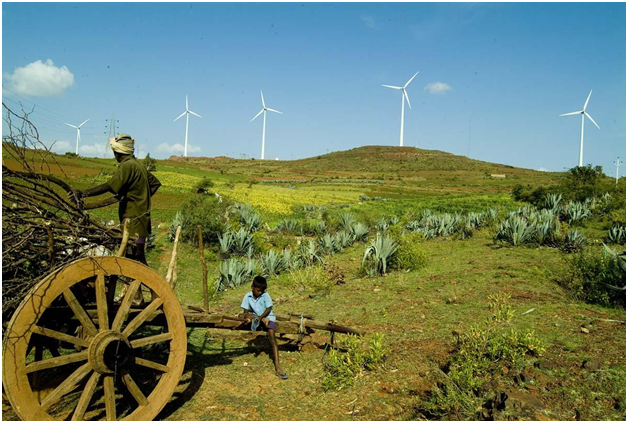 About 60% of companies have been acting toward the betterment of rural areas by providing support in the building of dams, renovating of pumps and construction of roads to improve commute. Companies have also been striving for rural advancement by organizing awareness camps for concerns like domestic brutality, infanticide and the absolute importance of education.

 “Again, the greatest use of a human was to be useful. Not to consume, not to watch, but to do something for someone else that improved their life, even for a few minutes.”
These words by Dave Eggers evoke excitement as we acknowledge how CSR has come a long way. From responsive projects to sustainable initiatives, corporate entities have unquestionably displayed their capacity to make a vital difference to the society and enhance the overall quality of life. Productive partnerships among foundations, industry leaders, NGOs and the government are likely to put India’s social improvement on the fast track.
. The last decade of the twentieth century witnessed a transformation in focus, from charity and traditional humanitarianism to direct engagement of industry in mainstream progression, and a concern for disadvantaged groups in society.
In India, there is an increasing realization that businesses cannot thrive in solitude, and that social growth is essential for an increase in sustainability. An ideal CSR system has both moral and profound dimensions—especially in India, where there exists a wide gap between segments of people in terms of benefits and standards, as well socio-economic status.
So what’s been happening in the face of CSR in 2016? Read on to explore some of the most prominent trends that have emerged this year.
“Again, the greatest use of a human was to be useful. Not to consume, not to watch, but to do something for someone else that improved their life, even for a few minutes.”
These words by Dave Eggers evoke excitement as we acknowledge how CSR has come a long way. From responsive projects to sustainable initiatives, corporate entities have unquestionably displayed their capacity to make a vital difference to the society and enhance the overall quality of life. Productive partnerships among foundations, industry leaders, NGOs and the government are likely to put India’s social improvement on the fast track.
. The last decade of the twentieth century witnessed a transformation in focus, from charity and traditional humanitarianism to direct engagement of industry in mainstream progression, and a concern for disadvantaged groups in society.
In India, there is an increasing realization that businesses cannot thrive in solitude, and that social growth is essential for an increase in sustainability. An ideal CSR system has both moral and profound dimensions—especially in India, where there exists a wide gap between segments of people in terms of benefits and standards, as well socio-economic status.
So what’s been happening in the face of CSR in 2016? Read on to explore some of the most prominent trends that have emerged this year.
 This year has presented an opportunity for organizations to join efforts around inter-governmental ambitions.
In December 2015, the annual Conference COP21, AKA the Paris Climate Conference, aimed to build on 20 years of UN discussions with the goal of reaching a legally obligatory and universal agreement on climate, with the intention of keeping global warming under 2°C. More than just entering their CO₂ emission reduction aims, companies will need to adopt carbon reduction as an operating strategy.
We’ve seen more transparent broadcasting on the climate consequence of growing, processing, manufacturing, and using products. Companies are looking strictly at their own methods and their supply-chain comrades, and continue to try and close the loop on post-consumer waste.
So as you step into another year, think higher, move quicker, and associate with as many organizations as possible; the world depends on you.
This year has presented an opportunity for organizations to join efforts around inter-governmental ambitions.
In December 2015, the annual Conference COP21, AKA the Paris Climate Conference, aimed to build on 20 years of UN discussions with the goal of reaching a legally obligatory and universal agreement on climate, with the intention of keeping global warming under 2°C. More than just entering their CO₂ emission reduction aims, companies will need to adopt carbon reduction as an operating strategy.
We’ve seen more transparent broadcasting on the climate consequence of growing, processing, manufacturing, and using products. Companies are looking strictly at their own methods and their supply-chain comrades, and continue to try and close the loop on post-consumer waste.
So as you step into another year, think higher, move quicker, and associate with as many organizations as possible; the world depends on you.

 In the words of the beneficiaries-
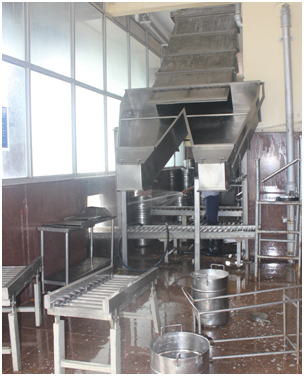
“Our team has quantified the savings from these investments and represented them in terms of the additional meals that we can serve.
It seems like these investments can help us serve 1.70 lacs meals a year which translates to helping 750 kids get a mid-day meal throughout the school calendar year without having to raise donations!!! And this will accrue every year till the end of life of these equipments which is generally about 5 years (in depreciation terms).
Apart from this, there is also an important unquantifiable saving of 40% water reduction; the reason we cannot quantify it is because we get the water from Mother Earth; however, in some locations, we pay for water which costs us about 6 ps per litre.”
The engagement was well received which resulted in Hibu India Private Limited continuing its partnership with Vardaan for the second year as well.
This time they chose Education, Disability & Livelihood and Healthcare as their focus areas and worked with four non-profits which had been vetted by Vardaan.
Education:Chose to support a residential school exclusively for children born into India’s lowest social and economic class. The project offers free, high-quality education at its residential school and subsequently at top-tier colleges.Each child is provided with quality educational, medical, dental and residential care
Disability & Livelihood: Supported a Vocational Training Center cum Sheltered Workshop in Bangalore providing training and employment to differently abled individuals.
Healthcare: Supported a foundation whose primary focus is to help the needy by providing them with quality healthcare. They conduct highly complex surgeries for the needy patients for free/subsidized cost.
Vardaan will continue to monitor& evaluatethe performance of the projects on the ground. This exercise is carried forth by Vardaan to ensure the smooth functioning of the projects and showcase a greater impact that helps to elevate the projects.
The impact of HIBU’s support is already evident a few months after the funds were disbursed and will continue for the rest of the year as well.
HIBU- Truly the CSR hero!
In the words of the beneficiaries-
“Our team has quantified the savings from these investments and represented them in terms of the additional meals that we can serve.
It seems like these investments can help us serve 1.70 lacs meals a year which translates to helping 750 kids get a mid-day meal throughout the school calendar year without having to raise donations!!! And this will accrue every year till the end of life of these equipments which is generally about 5 years (in depreciation terms).
Apart from this, there is also an important unquantifiable saving of 40% water reduction; the reason we cannot quantify it is because we get the water from Mother Earth; however, in some locations, we pay for water which costs us about 6 ps per litre.”
The engagement was well received which resulted in Hibu India Private Limited continuing its partnership with Vardaan for the second year as well.
This time they chose Education, Disability & Livelihood and Healthcare as their focus areas and worked with four non-profits which had been vetted by Vardaan.
Education:Chose to support a residential school exclusively for children born into India’s lowest social and economic class. The project offers free, high-quality education at its residential school and subsequently at top-tier colleges.Each child is provided with quality educational, medical, dental and residential care
Disability & Livelihood: Supported a Vocational Training Center cum Sheltered Workshop in Bangalore providing training and employment to differently abled individuals.
Healthcare: Supported a foundation whose primary focus is to help the needy by providing them with quality healthcare. They conduct highly complex surgeries for the needy patients for free/subsidized cost.
Vardaan will continue to monitor& evaluatethe performance of the projects on the ground. This exercise is carried forth by Vardaan to ensure the smooth functioning of the projects and showcase a greater impact that helps to elevate the projects.
The impact of HIBU’s support is already evident a few months after the funds were disbursed and will continue for the rest of the year as well.
HIBU- Truly the CSR hero! 
 While a number of CSR activities have already been successfully implemented, most of these were primarily focused on providing basic infrastructural and educational reinforcements to the remote public. However, things have changed with the issue of conserving the ecosystem slowly catching up in major economies in the world.
Among the few green initiatives that have come to fruition over the years, the National Aluminium Company Limited (NALCO)’s efforts are worth mentioning. This public-private establishment has actively worked with the Indian government to implement the Swacch Bharat Mission across the country.
While a number of CSR activities have already been successfully implemented, most of these were primarily focused on providing basic infrastructural and educational reinforcements to the remote public. However, things have changed with the issue of conserving the ecosystem slowly catching up in major economies in the world.
Among the few green initiatives that have come to fruition over the years, the National Aluminium Company Limited (NALCO)’s efforts are worth mentioning. This public-private establishment has actively worked with the Indian government to implement the Swacch Bharat Mission across the country.
 However, compared to the gargantuan environment related hurdles ahead of us, just a few brightspots aren’t enough. So, we bring to you some of the best environment conservation-specific ideas that can help you reach your CSR missions while, at the same time, safeguarding humanity’s future.
.jpg)